Ford Trucks for Hauling Landscaping Equipment Around Kansas City
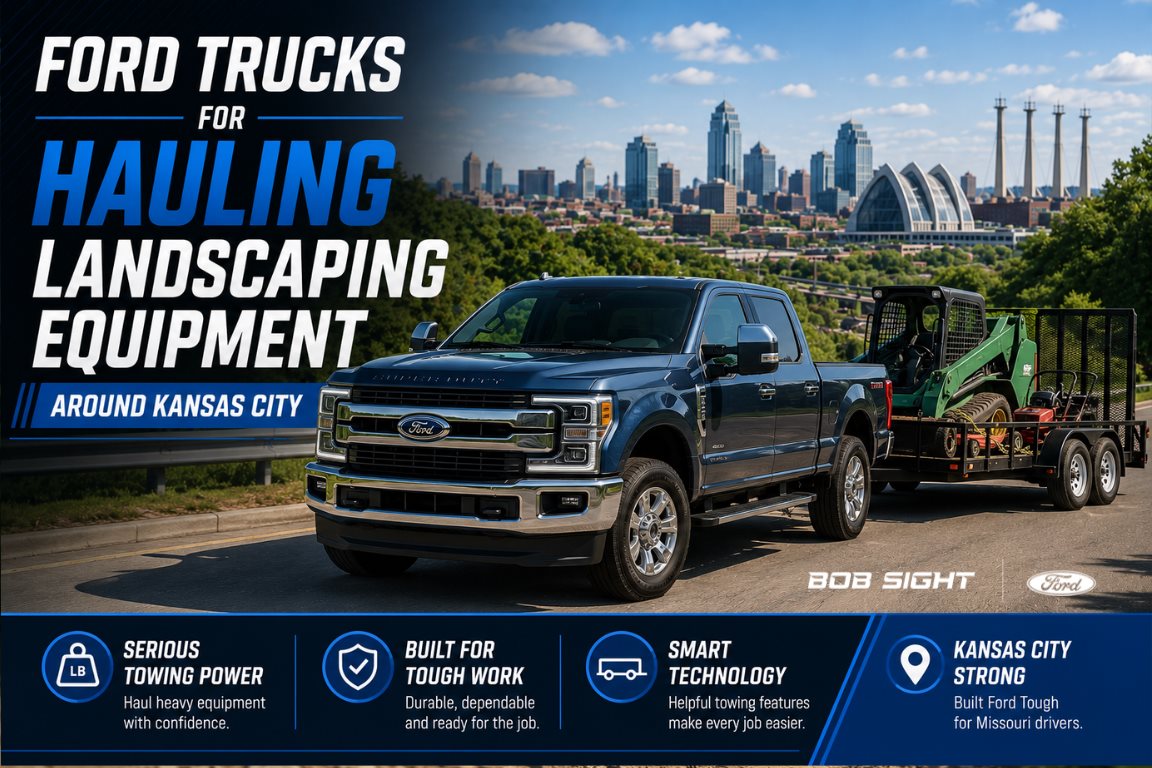
At Bob Sight Ford in Lee's Summit, Missouri, we assist commercial contractors, independent landscapers, and fleet managers in selecting the ideal Ford truck for hauling equipment across the Kansas City Metro. Operating a successful lawn care or hardscaping business across Jackson County requires dependable, heavy-duty commercial vehicles capable of moving heavy machinery, raw materials, and multi-axle utility trailers. Whether you are transporting commercial zero-turn mowers along Interstate 470, hauling skid steers near the Summit Fair shopping district, or delivering bulk mulch and gravel to residential sites in Raytown and Blue Springs, choosing the right truck platform directly impacts your daily productivity and operational safety. In this detailed commercial vehicle guide, our truck specialists analyze Ford's light-duty and Super Duty lineup, explain critical weight ratings, review smart trailering technologies, and outline proactive fleet maintenance strategies tailored for Midwest contractors.
In this guide you will learn:
- How to match specific landscaping equipment setups with the right Ford F-150 or Super Duty chassis.
- Key performance and payload differences between the Ford F-150, F-250 Super Duty, and F-350 dual-rear-wheel models.
- Clear, plain-language definitions of critical trailering terms including Gross Vehicle Weight Rating (GVWR) and Gross Combined Weight Rating (GCWR).
- Step-by-step instructions for calculating real-world payload and trailer towing allowances for your work crew.
- How Ford technology like Pro Power Onboard and Pro Trailer Backup Assist improves jobsite efficiency across western Missouri.
- Essential commercial vehicle maintenance schedules that preserve engine power, transmission health, and resale value.
Matching Ford Truck Models to Specific Landscaping Equipment Loads
Selecting the proper Ford truck for your landscaping business depends on the combined weight of your tools, trailers, crew members, and raw payload materials. Landscaping operations range from residential lawn maintenance using lightweight utility trailers to heavy hardscaping projects requiring tandem-axle dump trailers and hydraulic machinery. Matching your equipment footprint to the correct truck platform prevents mechanical strain, avoids costly roadside penalties, and ensures your crew operates safely across Missouri highways. Understanding your daily operational demands allows you to select between the versatile F-150 and the heavy-duty Super Duty family with total confidence.
For independent lawn care professionals and small maintenance crews operating around Lee's Summit, the Ford F-150 offers an outstanding combination of maneuverability, fuel economy, and impressive capability. When configured with the available 3.5L EcoBoost V6 engine or the 5.0L Ti-VCT V8 engine, the F-150 handles enclosed utility trailers carrying twin zero-turn mowers, commercial trimmers, and handheld power equipment with ease. Modern F-150 models feature high-strength, military-grade aluminum alloy beds that reduce curb weight while maximizing bed payload capacity for tools, bags of fertilizer, or palleted turf grass.
When your landscaping business expands into hardscaping, tree care, or large-scale commercial installation, stepping up to a Ford Super Duty F-250 or F-350 becomes necessary. Heavy equipment such as compact track loaders, mini-excavators, block splitters, and tandem-axle dump trailers loaded with gravel or soil easily exceed the weight limits of half-ton trucks. Equipped with the available 6.7L Power Stroke V8 Turbo Diesel engine or the massive 7.3L Godzilla V8 gas engine, a Super Duty provides the rigid fully boxed steel frame, heavy-duty solid axles, and high-capacity braking required to tow heavy machinery securely over steep terrain near Highway 150 and MO-291.
Comparing Ford F-150, F-250 Super Duty, and F-350 for Commercial Hauling
Comparing Ford truck models side by side helps business owners evaluate towing capacity, bed payload, engine options, and chassis configurations for daily commercial utility. Choosing the right commercial truck requires balancing raw capability with operating costs, ride comfort, and daily maneuverability in tight residential neighborhoods. Evaluating these core performance parameters ensures your investment meets current contract requirements while accommodating future business growth.
To help you compare popular commercial Ford trucks directly, review the functional specifications outlined in the comparison table below:
| Model & Chassis Category | Primary Commercial Engine Options | Maximum Conventional Towing Capacity | Best Suited Landscaping Application |
|---|---|---|---|
| Ford F-150 (Half-Ton) | 3.5L EcoBoost V6 / 5.0L V8 / 3.5L PowerBoost Full Hybrid | Up to 13,500 lbs (Properly Equipped) | Residential lawn mowing, single-axle trailer towing, light turf installation |
| Ford F-250 Super Duty (3/4-Ton) | 6.8L V8 / 7.3L Godzilla V8 / 6.7L PowerStroke Turbo Diesel V8 | Up to 22,000 lbs (Conventional Receiver) | Tandem-axle equipment trailers, medium hardscaping, skid steer transport |
| Ford F-350 Single Rear Wheel (1-Ton) | 7.3L Godzilla V8 / 6.7L PowerStroke V8 / High Output Diesel V8 | Up to 25,000 lbs (Conventional Receiver) | Heavy tandem dump trailers, multi-unit machinery transport, heavy bed payloads |
| Ford F-350 Dual Rear Wheel (1-Ton DRW) | 6.7L PowerStroke V8 / 6.7L High Output PowerStroke Diesel V8 | Up to 28,000 lbs Conventional / 38,000 lbs Gooseneck | Maximum commercial hauling, gooseneck dump trailers, heavy stone and dirt transport |
Consider a practical commercial scenario involving a landscaping company based in Grain Valley that manages commercial properties along I-70. If their primary work involves pulling a 16-foot open landscape trailer loaded with two commercial riders and handheld power tools, a Ford F-150 SuperCrew equipped with the 3.5L EcoBoost V6 engine delivers excellent low-end torque while maintaining comfortable cabin space for a three-person work crew. The responsive 10-speed automatic transmission keeps engine RPM in the optimal power band whether merging onto highways or navigating residential streets.
Conversely, a hardscaping firm operating out of Blue Springs that routinely moves a skid steer loader weighing 8,500 pounds on a 3,500-pound equipment trailer needs the structural strength of a Ford F-250 or F-350 Super Duty. The heavy-duty TorqShift 10-speed automatic transmission features selectable drive modes, including Tow/Haul mode, which optimizes shift timing and engages automatic engine braking on downhill grades along US-50. This heavy-duty drivetrain reduces brake pad wear and maintains total vehicle control when stopping heavy loads on steep inclines.
Understanding Key Commercial Truck Terms: Payload, GCWR, and Tongue Weight
Understanding key commercial vehicle weight definitions is essential for staying compliant with state transportation regulations and protecting your truck from structural damage. Overloading a commercial vehicle compromises steering control, increases stopping distances, and accelerates tire and suspension wear. Defining these essential weight metrics in plain language allows fleet operators in Jackson County to calculate trailer loads accurately before heading out to job sites.
- Gross Vehicle Weight Rating (GVWR): The maximum allowable total weight of the truck itself, including the chassis, engine, fluids, driver, passengers, tools, equipment, and bed payload.
- Payload Capacity: The maximum weight of cargo, passengers, and equipment you can place directly inside the cab and truck bed, calculated by subtracting the truck's unladen curb weight from its total GVWR.
- Gross Combined Weight Rating (GCWR): The absolute maximum allowable combined weight of the fully loaded truck and the fully loaded trailer combined, established by factory structural testing.
- Tongue Weight: The downward vertical force exerted by the trailer coupler onto the truck's hitch ball, which should ideally equal 10 to 15 percent of total loaded trailer weight for conventional tow hitches.
- Gross Axle Weight Rating (GAWR): The maximum weight capacity specified for a single front or rear axle assembly, including tires, wheels, springs, and housing components.
Operating within these specified factory thresholds ensures your work truck complies with Missouri Department of Transportation (MoDOT) weight regulations on public roadways. For instance, loading two pallets of retaining wall block weighing 3,000 pounds directly into the bed of a single-rear-wheel truck requires checking both the bed payload limit and the rear GAWR rating. Placing excessive weight behind the rear axle lifts the front wheels, reducing steering traction and headlights aiming on dark rural roads near Chipman Road.
Furthermore, managing tongue weight correctly prevents dangerous trailer sway on high-speed corridors like I-470. Insufficient tongue weight causes the trailer to fishtail at highway speeds, while excessive tongue weight overloads the rear suspension, causing the truck to sag and lifting the front steering axle. Using a weight-distribution hitch system on trailers weighing over 5,000 pounds redistributes coupler force evenly across all truck and trailer axles, delivering a smooth, level ride across western Missouri.
Step-by-Step Guide to Calculating Payload and Towing Capacity
Calculating your truck's true available payload and towing capacity requires factoring in crew weight, fuel, bed equipment, and actual trailer coupler weight. Relying solely on maximum brochure ratings can lead to accidental overloading because optional cab equipment and aftermarket accessories reduce available capacity. Following a structured calculation routine guarantees your landscape rig operates safely within legal factory guidelines.
- Locate the Official Tire and Loading Information Sticker: Open the driver-side door pillar to find the factory placard listing the exact maximum payload capacity for your specific truck VIN as built.
- Subtract Total Passenger and Crew Weight: Calculate the combined weight of the driver and all crew members riding in the cab, subtracting that figure directly from the listed door-sticker payload capacity.
- Deduct Installed Aftermarket Equipment and Bed Tools: Subtract the weight of added truck accessories, such as commercial bed liners, steel toolboxes, fuel transfer tanks, rack systems, and hitch assemblies.
- Calculate Maximum Allowable Trailer Tongue Weight: The remaining payload figure represents your available capacity for bed cargo and trailer tongue weight combined. Ensure your trailer tongue weight does not exceed this remaining allowance.
- Verify Total Loaded Trailer Weight Against Towing Ratings: Weigh your loaded landscape trailer on a commercial scale, confirming that the total combined weight of trailer, mowers, fuel, and handheld gear stays below your truck's conventional towing limit and GCWR.
Following this step-by-step calculation method protects your business from liability and keeps your equipment running smoothly. For example, a landscaping crew operating a Ford F-150 with a listed door-sticker payload of 1,800 pounds must account for three crew members weighing a combined 600 pounds, a steel bed toolbox weighing 150 pounds, and a commercial hitch receiver. This leaves approximately 1,000 pounds of remaining payload available for bed cargo or trailer tongue weight.
If that same crew attaches a loaded two-axle mower trailer with a total weight of 6,000 pounds, the resulting tongue weight resting on the hitch ball will be roughly 600 to 750 pounds (10 to 12 percent of total trailer weight). Because 750 pounds is less than the 1,000 pounds of remaining available payload, the truck operates safely within its legal engineering limits. Performing these calculations beforehand ensures complete safety on roads near Blue Ridge Boulevard.
Essential Ford Towing and Hauling Technologies for Kansas City Contractors
Ford integrates advanced commercial technologies like Pro Power Onboard, Smart Hitch, and Blind Spot Information System with Trailer Coverage to streamline jobsite productivity. Modern work trucks serve as mobile offices and jobsite power generators, allowing landscaping crews to operate efficiently without hauling heavy portable gas generators. Equipping your fleet with these intelligent productivity features saves labor time and improves safety across every project site in the Kansas City Metro.
One of the most revolutionary features for landscape contractors is Ford's Pro Power Onboard system, available on F-150 models including the PowerBoost Full Hybrid as well as Super Duty trucks. Pro Power Onboard provides usable outlet power ranging from 2.0kW up to 7.2kW directly through bed-mounted outlets. Landscaping crews can power electric string trimmers, commercial battery chargers, power tools, halogen work lights, and wood chippers directly from the truck engine, eliminating the noise, fumes, and maintenance associated with standalone gas generators.
Navigating busy traffic along I-470 or changing lanes on multi-lane routes like MO-291 is significantly safer thanks to Ford Co-Pilot360 technology. The available Blind Spot Information System (BLIS) with Towing Coverage extends radar monitoring down the entire length of your attached utility trailer, alerting the driver via side-mirror indicators if a vehicle enters the trailer's blind spot zone. Furthermore, Integrated Trailer Brake Controllers allow precise adjustment of electric trailer brakes directly from the dashboard, delivering smooth, synchronized stopping power in heavy traffic.
Step-by-Step Process for Setting Up Smart Hitch and Pro Trailer Backup Assist
Configuring Ford's Smart Hitch and Pro Trailer Backup Assist features allows drivers to verify proper weight distribution and reverse long utility trailers with steering-wheel knob control. Backing a long enclosed trailer or dump trailer into tight residential driveways near Summit Fair can be challenging for new crew members. Utilizing Ford's built-in camera algorithms and digital guidance systems turns complex reversing maneuvers into simple, stress-free tasks.
- Enter Trailer Dimensions into the SYNC Center Display: Access the Towing menu on the SYNC touchscreen, select Add Trailer, and enter specific measurements including trailer length, tongue-to-axle distance, and brake type.
- Calibrate the Pro Trailer Backup Assist Sensor: Affix the specialized anti-glare tracking sticker to the trailer tongue according to screen prompts, or pair the wireless trailer sensor to allow camera tracking.
- Drive Forward in a Straight Line to Complete Auto-Calibration: Drive the truck and trailer forward at low speed along a flat roadway until the SYNC system confirms digital tracking calibration is complete.
- Utilize Smart Hitch to Measure Tongue Weight Onscreen: Access the Smart Hitch feature on the center display to view real-world tongue weight status measured directly by rear suspension height sensors.
- Engage the Pro Trailer Control Knob During Reverse Maneuvers: Press the center button on the Pro Trailer Backup Assist knob, release the steering wheel, and rotate the dial in the direction you want the trailer to travel while modulating the foot brake.
This automated setup process dramatically reduces training time for new landscape crew members while minimizing jobsite property damage. A driver backing a multi-mower trailer between parked cars on residential streets in Lee's Summit simply turns the dashboard knob left or right, and the truck automatically calculates correct steering wheel inputs to guide the trailer smoothly into position.
Additionally, Smart Hitch provides instant visual feedback on the center touchscreen, displaying whether your trailer tongue weight is too light, too heavy, or properly balanced. Adjusting your zero-turn mower position on the trailer bed by just a few inches brings the tongue weight into the optimal green zone, eliminating trailer sway before you enter highway traffic.
Quick Facts: Ford Landscaping Trucks at a Glance
Core performance metrics and commercial engineering standards highlight why Ford trucks lead the landscaping industry. Reviewing essential specification highlights helps fleet buyers choose the right platform for their daily commercial operational needs. Below is a summary of key capability facts for Ford commercial trucks:
- F-150 Max Towing Capacity: Reaches up to 13,500 pounds conventional towing when properly equipped with the 3.5L EcoBoost V6 engine.
- Super Duty Diesel Torque Leader: The 6.7L High Output Power Stroke V8 Turbo Diesel produces up to 500 horsepower and 1,200 lb-ft of torque.
- Gas Engine Commercial Option: The 7.3L Godzilla V8 delivers reliable pushrod gas performance with 430 horsepower and 485 lb-ft of torque.
- Pro Power Onboard Output: Generates up to 7.2kW of exportable electrical power in the truck bed to run commercial tools and chargers.
- High-Strength Frame Construction: Built on a fully boxed high-strength steel frame with military-grade aluminum alloy body panels.
- Integrated Commercial Towing Tech: Features available Smart Hitch, Onboard Scales, Pro Trailer Hitch Assist, and 360-Degree Camera Packages.
These key engineering figures highlight the unmatched versatility of Ford's commercial truck family. Whether your landscaping business handles small residential lawns or manages multi-acre commercial installations across Jackson County, Ford builds a chassis tailored for your daily demands. Visiting Bob Sight Ford allows you to explore these commercial options in person and consult with dedicated truck specialists.
Long-Term Ownership Planning and Fleet Maintenance Strategy
Implementing a rigorous preventative maintenance program protects commercial engine performance, preserves automatic transmission health, and minimizes costly jobsite downtime. Commercial work trucks operate under severe duty cycles involving frequent stop-and-go driving, heavy trailer towing, extended engine idling, and dust exposure on unpaved jobsites. Adhering to factory-recommended severe-duty service intervals ensures your fleet operates reliably throughout peak landscaping seasons.
Engine oil maintenance is critical for turbocharged EcoBoost gas engines and Power Stroke diesel powertrains. For gas engines, synthetic oil changes using Motorcraft SAE 5W-30 motor oil meeting Ford WSS-M2C961-A1 specifications should occur every 5,000 miles under commercial towing conditions. For 6.7L Power Stroke Turbo Diesel engines, changing oil every 5,000 miles or 250 engine hours using Motorcraft Super Duty SAE 15W-40 or 5W-40 synthetic diesel oil meeting API CK-4 standards protects high-pressure fuel injectors and turbocharger bearings from premature wear.
Transmission service, cooling system flushes, and brake pad inspections are equally vital for commercial work trucks. Heavy towing generates significant heat inside automatic transmissions, making fluid exchanges every 30,000 to 45,000 miles essential for preserving valve body solenoids and clutch packs. Furthermore, replacing engine air filters and cabin filters frequently prevents dust buildup on jobsites near MO-291, ensuring your engine breathes clean air and maintains optimal fuel efficiency. Servicing your fleet at Bob Sight Ford guarantees that factory-certified technicians install genuine Motorcraft parts, keeping your commercial warranty fully protected.
Maintaining full service records for every commercial vehicle in your fleet significantly boosts trade-in values when it comes time to cycle new trucks into your business. A clean CARFAX service history showing consistent maintenance at an authorized dealership reassures future buyers that the truck was maintained to high commercial standards. Proactive maintenance planning keeps your crews working and protects your company's bottom line.
Frequently Asked Questions About Ford Landscaping Trucks in Kansas City
Is a Ford F-150 powerful enough for a professional landscaping business in Kansas City?
Yes, a properly configured Ford F-150 is more than powerful enough for independent lawn care contractors and residential landscape maintenance businesses. When equipped with the available 3.5L EcoBoost V6 engine or the 5.0L V8 engine, the F-150 delivers maximum conventional towing capacities up to 13,500 pounds and bed payload capacities exceeding 2,000 pounds. This provides ample capability for pulling open or enclosed utility trailers carrying twin commercial zero-turn mowers, trimmers, blowers, and crew gear.
Additionally, the F-150 offers impressive maneuverability when navigating narrow residential driveways and cul-de-sacs near Summit Fair or Raytown. Its fuel-efficient powertrain options, including the available 3.5L PowerBoost Full Hybrid with Pro Power Onboard, allow landscape crews to run electrical equipment directly from bed outlets while keeping daily operating expenses manageable. For businesses focusing on lawn maintenance and light landscape installations, an F-150 delivers exceptional return on investment.
However, if your business plan includes heavy hardscaping, transporting compact track loaders, or hauling high-tonnage dump trailers, stepping up to an F-250 Super Duty is recommended. Our commercial truck team at Bob Sight Ford can review your equipment weights to help you choose between an F-150 and a Super Duty platform.
Which engine is better for a landscaping truck: gas or diesel?
Choosing between a gas engine like the 7.3L Godzilla V8 and a diesel like the 6.7L Power Stroke depends on daily towing weight, annual mileage, and budget preferences. Gas engines feature lower initial purchase costs, simplified routine maintenance, and easy cold-weather starting during Midwest winters. The 7.3L Godzilla V8 gas engine delivers 430 horsepower and 485 lb-ft of torque, making it an outstanding choice for medium-duty commercial towing and frequent stop-and-go routes across Lee's Summit.
On the other hand, the available 6.7L Power Stroke V8 Turbo Diesel engine produces up to 1,200 lb-ft of torque, delivering unmatched pulling power for heavy gooseneck trailers, tandem dump trailers, and machinery transport over 15,000 pounds. Diesel engines also deliver superior fuel efficiency when towing heavy loads on long highway runs along I-470 and I-70, and they offer extended engine operating lifespans when properly maintained with API CK-4 diesel oil.
Consider a contractor who regularly pulls a 14,000-pound loaded dump trailer across western Missouri. The 6.7L Power Stroke diesel engine provides effortless low-end climbing power and integrated engine braking that preserves service brakes on downhill grades. Our specialists at Bob Sight Ford can analyze your annual mileage and payload demands to recommend the ideal powertrain for your fleet.
What commercial Ford truck features help reduce jobsite fuel costs?
Ford commercial trucks feature advanced 10-speed automatic transmissions, Auto Start-Stop technology, EcoBoost turbocharging, and hybrid powertrains designed to maximize fuel efficiency. The standard TorqShift 10-speed automatic transmission features optimized gear spacing and multiple overdrive ratios that keep engine RPM low during high-speed highway cruising along US-50 and I-470.
For maximum fuel savings, the Ford F-150 PowerBoost Full Hybrid combines a 3.5L twin-turbo V6 engine with a 44-horsepower electric motor, achieving impressive EPA fuel economy ratings while providing up to 7.2kW of exportable bed power. This hybrid system allows crew members to run battery chargers and power tools without idling the main gasoline engine for hours on the jobsite, saving significant amounts of fuel over a full work season.
Pro-Tip from the Bob Sight Commercial Service Bay: Maintaining correct tire inflation pressures and replacing clogged engine air filters regularly prevents unnecessary fuel drag. Utilizing FordPass Telematics to monitor driver speed and excessive engine idling across your fleet further reduces monthly fuel expenses.
How does Missouri commercial vehicle registration work for landscape trucks and trailers?
In Missouri, commercial trucks and towed utility trailers must be registered based on combined Gross Vehicle Weight (GVW) ratings to comply with MoDOT regulations. When registering a commercial work truck at the local DMV, business owners must select a licensed weight category that covers the total combined weight of the truck, passengers, bed payload, and attached trailer combined.
If your combined truck and trailer weight exceeds 10,001 pounds in commercial operation, your vehicle falls under Federal Motor Carrier Safety Administration (FMCSA) safety guidelines, requiring safety equipment like fire extinguishers, reflective triangles, and annual vehicle safety inspections. Drivers operating commercial rigs with a Gross Combined Weight Rating (GCWR) over 26,001 pounds or towing a trailer rated over 10,000 pounds commercially may also require a Commercial Driver's License (CDL) depending on specific usage.
For example, an F-250 Super Duty pulling a tandem-axle machinery trailer near Grain Valley usually requires a commercial weight license plate registered for at least 18,000 to 24,000 pounds. Our commercial vehicle team at Bob Sight Ford assists local business owners in determining correct weight classifications to ensure full compliance before taking delivery.
Why should I buy my commercial landscaping trucks from Bob Sight Ford?
Purchasing your commercial fleet from Bob Sight Ford provides access to dedicated commercial vehicle specialists, flexible business financing options, priority service bays, and local community support. Business owners require commercial vehicles that stay on the road earning revenue, which is why our dealership offers specialized commercial sales guidance and streamlined commercial lending packages through Ford Credit Commercial Solutions.
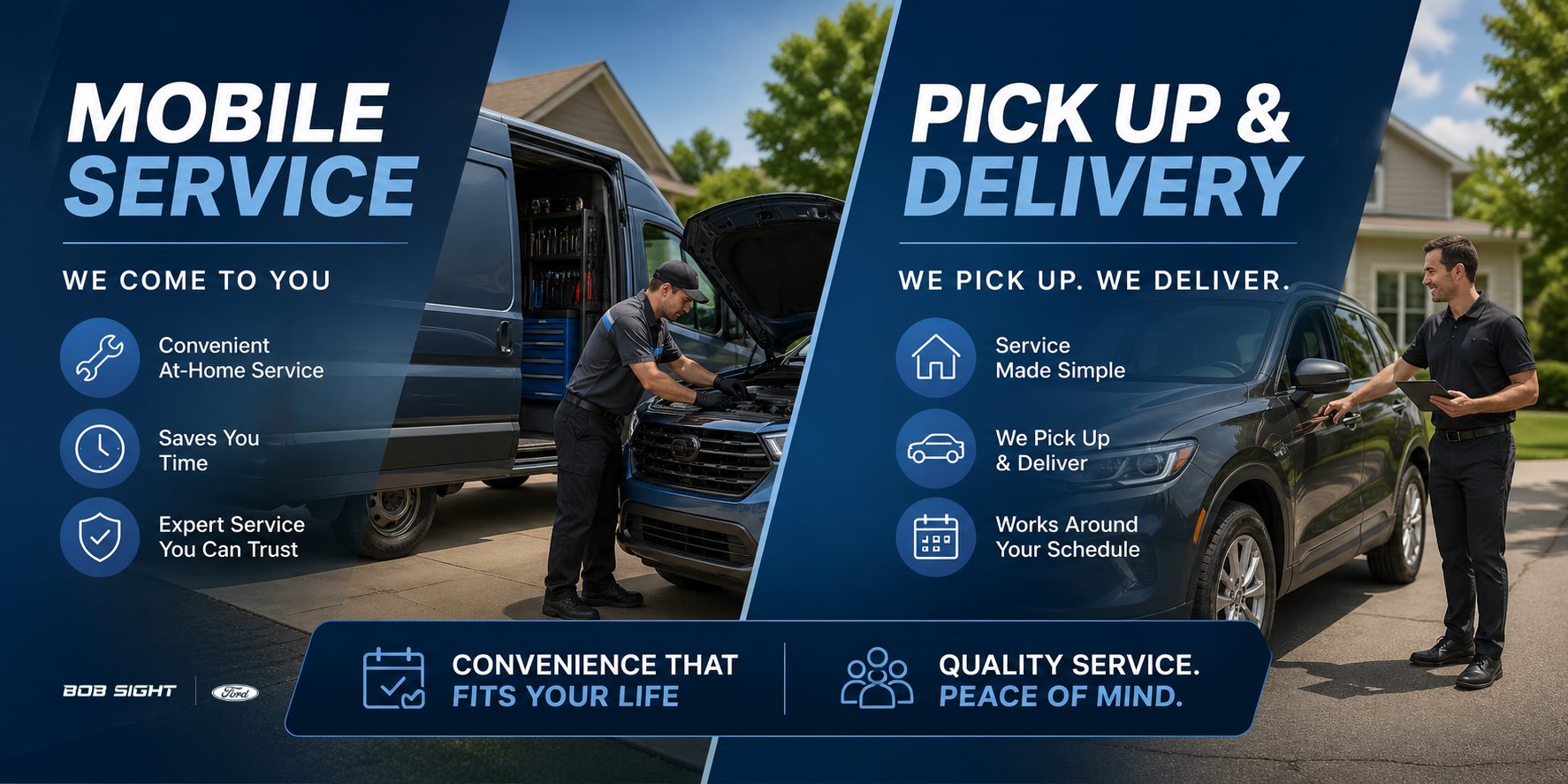
Every commercial Ford truck on our lot undergoes rigorous pre-delivery inspections by factory-certified technicians using state-of-the-art diagnostic equipment. We offer flexible commercial lines of credit, customizable vehicle upfitting support (including bed racks, toolboxes, and dump bodies), and priority service scheduling to minimize business downtime when routine maintenance is required. Furthermore, our convenient pickup and delivery options and Ford Mobile Service vans bring factory-certified maintenance directly to your jobsite or office lot.
Located conveniently at 610 NW Blue Parkway in Lee's Summit, Bob Sight Ford has served Jackson County contractors and fleet managers for generations. Choosing our dealership guarantees honest pricing, transparent communication, and an ongoing automotive partnership dedicated to keeping your landscaping business moving forward.
Why Partnering With a Local Dealership Matters for Kansas City Contractors
Partnering with an established local dealership like Bob Sight Ford ensures long-term community accountability, dedicated commercial support, and reliable service throughout your fleet's lifespan. Running a commercial landscaping business in the Kansas City Metro requires an automotive partner who understands the demands of local terrain, seasonal weather shifts, and regional jobsite realities. Unlike national online fleet brokers or distant out-of-state dealers, a local family-owned dealership relies on building lasting relationships with neighborhood business owners.
Located conveniently at 610 NW Blue Parkway in Lee's Summit, Missouri, Bob Sight Ford proudly serves commercial contractors and fleet operators across Jackson County and western Missouri. Our proximity to major commercial transportation corridors like US-50, I-470, MO-291, and I-70 makes bringing your trucks in for certified maintenance, oil changes, or heavy-duty repairs fast and convenient. Our certified master technicians use genuine Motorcraft parts and specialized diagnostic equipment to keep your work trucks operating at peak efficiency.
Choosing a local dealership connects your business with valuable operational amenities, including commercial vehicle financing, priority fleet service, Ford Mobile Service vans, and pre-arranged pickup and delivery options. Our team lives and works in the same communities you serve, giving us first-hand insight into what local contractors need to succeed. We invite you to visit Bob Sight Ford today to explore our heavy-duty commercial truck inventory and experience customer-first service built around your business goals.
Helpful Links
- Explore New Ford F-150 Work Truck Inventory in Lee's Summit
- Browse Heavy-Duty Ford Super Duty F-250 & F-350 Trucks
- Value Your Commercial Fleet Trade-In Online at Bob Sight Ford
- Apply for Commercial Truck Financing & Business Credit Lines
- Schedule Certified Commercial Truck Maintenance & Repair Online
Proud to Be Part of the Bob Sight Auto Group
Bob Sight Ford is proud to be a member of the Bob Sight Auto Group, serving drivers throughout Missouri and Kansas with trusted automotive sales, service, and financing support for over a century. Our dealership group operates four convenient retail locations across the region, delivering honest guidance, transparent pricing, and customer-focused service to every community we serve.
Explore all of our Bob Sight Auto Group dealership locations below: