Ford Brake Inspection Kansas City: How Often Should You Schedule Service?
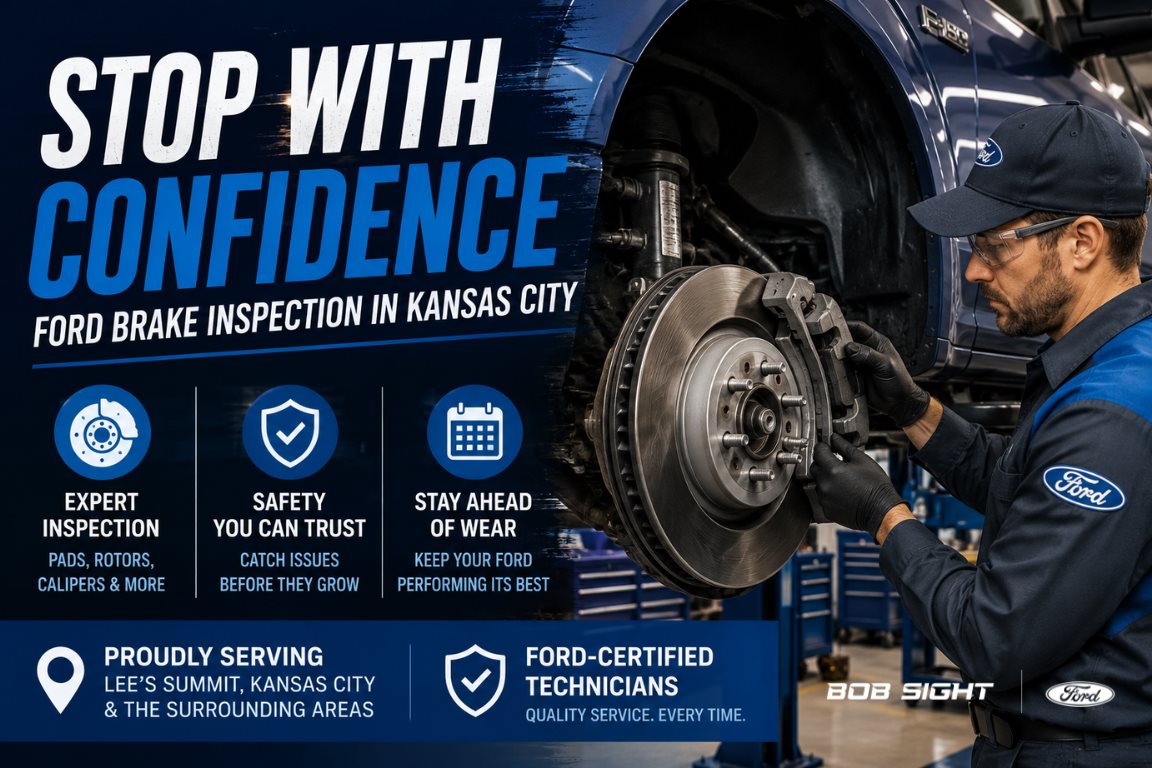
Ford brake inspection Kansas City drivers schedule regularly can help catch worn pads, rotor concerns, fluid issues, and stopping-performance changes before they become more serious safety problems. At Bob Sight Ford in Lee’s Summit, Missouri, we help Ford owners from Kansas City, Blue Springs, Independence, Raytown, Grain Valley, Belton, and across Jackson County understand when brake inspections matter, what technicians check, and how local driving conditions can affect brake wear.
Schedule Ford brake inspection service at Bob Sight Ford
In This Guide You'll Learn
Brake inspections are one of the most important maintenance services for Ford owners because stopping power affects every drive. This guide explains how often to schedule inspections, what warning signs to watch for, and why local Kansas City Metro conditions can shorten brake component life.
- How often many Ford drivers should schedule brake inspections
- What Ford-Certified Technicians check during a brake inspection
- How Kansas City traffic, hills, weather, and potholes affect brake wear
- What brake pads, rotors, calipers, and brake fluid do in plain language
- Warning signs that your Ford may need brake service soon
- How brake inspections support long-term Ford ownership planning
- Why Bob Sight Ford is a local resource for Ford brake service near Kansas City
How Often Should Kansas City Drivers Schedule a Ford Brake Inspection?
Many Ford drivers should have brakes inspected during routine maintenance visits and any time they notice squealing, grinding, vibration, longer stopping distance, warning lights, or a change in pedal feel. The exact timing depends on your Ford model, driving habits, mileage, road conditions, towing use, and whether your vehicle spends more time in city traffic or highway driving.
Brake wear does not happen at the same pace for every driver. A Ford Escape used mainly for highway commuting may wear brakes differently than a Ford Explorer that handles school routes, sports practices, and weekend traffic across the Kansas City Metro. A Ford F-150 or Super Duty used for towing, hauling, or contractor work may place more demand on brake components than a lightly driven commuter vehicle. That is why a regular brake inspection schedule is more useful than waiting for a noise or warning sign.
Kansas City driving can be demanding on brakes because local routes often combine highway speed, stop-and-go traffic, hills, rain, winter weather, and rough pavement. Drivers navigating the I-470 and US-50 split may brake differently than drivers moving through shopping traffic near Summit Fair or Independence Center. Frequent short trips can also wear brakes faster because the system heats and cools repeatedly. If your Ford spends a lot of time in traffic, your brakes may need closer attention than mileage alone suggests.
A good rule is to discuss brake inspections during regular service visits at Bob Sight Ford. When you schedule oil changes, tire rotations, battery checks, or seasonal maintenance, ask whether your brakes should be inspected at the same time. This keeps your maintenance plan organized and helps Ford-Certified Technicians track wear over time. When brake condition is documented regularly, it is easier to plan service before stopping performance becomes a concern.
What Ford-Certified Technicians Check During a Brake Inspection
A Ford brake inspection checks the parts that create, transfer, and control stopping force, including brake pads, rotors, calipers, brake fluid, brake lines, hardware, and related warning indicators. The goal is to confirm that the system is wearing normally and that your Ford can stop with consistent, predictable performance.
Brake pads are friction materials that press against the brake rotors to slow the vehicle. Rotors are metal discs that the brake pads clamp onto when you press the brake pedal. Calipers hold the pads and apply pressure to the rotors. Brake fluid transfers force from the pedal through the hydraulic brake system. If any of these components are worn, contaminated, damaged, or not moving correctly, stopping performance can change. A proper inspection looks at the system as a whole rather than one isolated part.
| Brake Component | What It Does | What Technicians Look For |
|---|---|---|
| Brake pads | Create friction against the rotors to slow the vehicle | Pad thickness, uneven wear, glazing, cracking, or contamination |
| Brake rotors | Provide the surface the pads press against | Scoring, grooves, warping, hot spots, rust, or thickness concerns |
| Calipers | Apply pressure to the pads and rotors | Sticking, leaking, uneven movement, or damaged hardware |
| Brake fluid | Transfers pedal force through the hydraulic system | Fluid level, contamination, moisture concerns, and service history |
| Brake lines and hoses | Carry brake fluid through the system | Leaks, cracking, corrosion, or physical damage |
During a brake inspection at Bob Sight Ford, technicians may also consider how your vehicle is used. A Ford F-150 that tows a boat to Missouri lakes may show different brake stress than a Ford Maverick used for light commuting near Lee’s Summit. An Explorer that carries passengers and cargo daily may need brake checks tied to family driving demands. This real-world context helps make the inspection more useful than a generic visual check.
Ford-Certified Technicians can also check for symptoms that may point beyond the brake pads. A soft pedal may suggest fluid or hydraulic concerns. A vibration while braking may suggest rotor irregularities. Pulling to one side may involve caliper movement, tire condition, alignment, or suspension factors. Because brakes work with tires, suspension, and driver inputs, a thorough inspection helps identify the right next step instead of guessing.
How Kansas City Driving Conditions Affect Brake Wear
Kansas City driving conditions can accelerate brake wear because local drivers often deal with stop-and-go traffic, hills, changing weather, potholes, construction zones, and frequent short trips. These conditions make brake inspections more important for Ford owners who want consistent stopping confidence year-round.
City traffic is one of the biggest contributors to brake wear. Drivers who commute through Kansas City, Independence, or busy retail areas near Summit Fair may brake repeatedly in a short distance. Each stop creates heat and friction. Over time, repeated heat cycles can wear brake pads, stress rotors, and change how the pedal feels. Highway driving may be easier on brakes when traffic is steady, but sudden slowdowns, merging traffic, and construction zones can still create heavy braking moments.
Terrain also matters. Hills around Raytown and parts of Jackson County can increase braking demands, particularly when driving with passengers, cargo, or a trailer. Descending grades require more brake control, and heavier vehicles generate more heat during repeated stops. Winter conditions can add another layer because drivers may brake more cautiously, deal with slick pavement, and experience road salt exposure that can affect metal components. Missouri’s seasonal swings can make routine inspection more valuable than waiting until a brake noise appears.
Potholes and rough roads can indirectly affect braking too. A hard impact on Highway 50 or a rough patch near a construction zone can affect tires, wheels, suspension, and alignment. If the vehicle pulls, vibrates, or feels unstable, braking can feel different as well. A Ford brake inspection at Bob Sight Ford can help separate true brake concerns from related issues that may affect stopping feel. This is useful for drivers searching for Ford brake inspection Kansas City because local roads often create overlapping symptoms.
Warning Signs Your Ford May Need Brake Service
Your Ford may need brake service if you hear squealing or grinding, feel vibration while braking, notice a soft or hard pedal, experience longer stopping distance, smell a burning odor, or see a brake warning light. These symptoms should not be ignored because brake issues can progress quickly once components are worn or damaged.
Squealing often means the brake pads may be nearing a wear limit, although noises can also come from dust, moisture, or hardware concerns. Grinding is more serious because it may indicate metal-on-metal contact, which can damage rotors and reduce stopping confidence. Vibration or pulsation through the pedal can point to rotor surface irregularities or heat-related changes. Pulling during braking may suggest uneven brake force, caliper concerns, tire issues, or alignment problems.
Pedal feel is another important warning sign. A soft or spongy brake pedal may suggest air, moisture, or hydraulic issues in the brake system. A pedal that feels unusually hard may point to a different mechanical or assist concern. If the brake pedal travels farther than normal or stopping distance increases, schedule service promptly. These symptoms can make everyday driving less predictable, whether you are stopping at a light in Lee’s Summit or slowing on a wet road near Blue Springs.
Drivers should also pay attention to smell and heat. A strong burning odor after braking heavily may indicate overheated brake components, a sticking caliper, or aggressive driving conditions. If one wheel feels much hotter than the others, a caliper or brake hardware issue may be present. The safest choice is to have the system inspected by Ford-Certified Technicians. Brake warning signs are not just inconveniences, they are signals that your Ford needs professional attention.
Step-by-Step: How to Decide When to Schedule Brake Inspection Service
The best way to decide when to schedule Ford brake inspection service is to combine your maintenance schedule, driving habits, mileage, warning signs, and local road conditions. A structured approach helps Kansas City drivers avoid waiting too long or scheduling only after a problem becomes obvious.
Brake inspection timing should start with your owner’s manual and service history. Ford maintenance guidance gives you a baseline, but your daily driving can change how often brake checks make sense. A driver who commutes mostly on open highways may have different needs than someone who drives in dense traffic, carries passengers daily, or tows regularly. Local Kansas City Metro conditions should be part of the decision because repeated braking, weather swings, and rough pavement all affect wear.
- Review your Ford owner’s manual and recent service records to see when brakes were last inspected.
- Think about your driving environment, including city traffic, highway routes, hills, towing, and cargo.
- Listen for squealing, scraping, grinding, clicking, or any new braking noise.
- Pay attention to pedal feel, stopping distance, vibration, pulling, or warning lights.
- Check whether you are already due for oil change, tire rotations, or other routine maintenance.
- Schedule service sooner if you tow, haul, drive in heavy traffic, or notice any braking change.
- Ask Bob Sight Ford to document brake condition so future service can be planned more easily.
This process works because it combines objective maintenance tracking with real driving feedback. A driver from Grain Valley who travels longer distances may need a different plan than a driver making frequent short trips in Kansas City. If your Ford Explorer handles family driving, your brake wear may reflect passenger weight and daily stops. If your Ford F-150 pulls a trailer, brake heat and wear patterns may need closer monitoring.
Bob Sight Ford makes it easier to connect brake inspections with routine service. You can schedule through our Ford service scheduling page and ask whether brake inspection should be included with your visit. This keeps your service plan organized and helps you avoid separate trips when multiple maintenance needs can be reviewed together.
Brake Pads, Rotors, and Brake Fluid Explained in Plain Language
Brake pads, rotors, and brake fluid are three core parts of your Ford braking system, and each one plays a different role in helping your vehicle slow and stop. Understanding these parts can help Kansas City drivers better interpret brake inspection results and service recommendations.
Brake pads are the wearable friction material in the system. When you press the brake pedal, the pads press against the rotors to create friction. That friction converts motion into heat, which is why brakes can become hot during repeated stops or towing. Pads wear down over time because that friction gradually removes material. Different driving patterns can affect pad life, including traffic density, vehicle weight, towing, hill driving, and braking habits.
Rotors are the metal discs behind the wheels that work with the brake pads. A rotor needs a smooth, even surface to allow consistent braking. Heat, uneven pad material transfer, rust, or aggressive braking can create grooves, scoring, hot spots, or vibration. If rotors become too worn or uneven, new pads alone may not restore ideal braking feel. That is why technicians inspect both pads and rotors instead of treating pad replacement as the only possible brake service.
Brake fluid is the hydraulic fluid that transfers force from the brake pedal to the brake components at the wheels. Brake fluid can absorb moisture over time, which may affect performance and internal system health. Low fluid level can indicate wear or possible leaks, while contaminated fluid may need service based on Ford guidance and inspection results. For Ford owners in Missouri, where humidity, temperature swings, and seasonal driving are common, brake fluid condition should not be overlooked during a proper inspection.
Ford Brake Inspection vs Quick Stop Brake Check
A Ford brake inspection at a dealership service center provides a more vehicle-specific review than a quick stop brake check because technicians can evaluate brake wear in the context of your Ford model, service history, and local driving needs. A fast inspection may identify obvious issues, but a Ford-focused review can provide better long-term maintenance guidance.
Many drivers look for quick answers when brakes make noise. A basic brake check may confirm whether pads look worn, but it may not fully account for Ford specifications, electronic brake systems, service records, brake fluid condition, or related components. Modern Ford vehicles may include advanced driver-assist features, electronic parking brake systems, trailer brake controls, and model-specific brake hardware. These systems are easier to evaluate accurately when the service team understands Ford design and maintenance expectations.
At Bob Sight Ford, brake inspections are handled with Ford ownership in mind. Ford-Certified Technicians can inspect pads, rotors, calipers, hoses, fluid, and related components while also considering how your Ford is used. A Ford Ranger used for commuting and weekend projects may require different guidance than a Super Duty used for hauling. A Mustang Mach-E, Explorer, Bronco, Escape, or F-150 may each involve different driving patterns, vehicle weight, and maintenance expectations.
| Inspection Path | What It Usually Focuses On | Best Fit |
|---|---|---|
| Quick brake check | Basic visible wear or obvious symptoms | Drivers needing an initial look at a simple concern |
| Ford dealership brake inspection | Ford-specific brake components, service history, fluid, wear patterns, and related systems | Ford owners who want accurate maintenance planning and model-specific guidance |
| Full diagnostic brake evaluation | Complex noises, warning lights, hydraulic issues, vibration, pulling, or repeated concerns | Drivers with symptoms that need deeper troubleshooting |
For Kansas City Metro drivers, the dealership path is valuable because brake wear is often tied to local use. Heavy traffic near Independence Center, rough pavement near construction zones, and repeated stops around schools or shopping areas can create specific wear patterns. Bob Sight Ford can help interpret those patterns and recommend service based on the actual condition of your Ford, not just a generic mileage number.
How Brake Inspections Support Towing, Family Driving, and Work Use
Brake inspections are important for towing, family driving, and work use because heavier loads and frequent stops increase the demand placed on your Ford braking system. Drivers who carry passengers, tools, trailers, or cargo should pay close attention to brake condition.
Towing adds weight and heat to the braking equation. Even when a trailer has its own brakes, the tow vehicle’s brake system still plays a major role in control and confidence. Ford F-150, Ranger, Super Duty, and Expedition drivers who tow boats, campers, work trailers, or equipment should include brake inspections in their ownership plan. Brake pads, rotors, fluid, trailer brake controls, and tires all work together when slowing a loaded vehicle. If one part is not performing well, the driver may notice longer stopping distance or less confidence on hills and highways.
Family driving adds its own kind of brake demand. A Ford Explorer or Escape carrying passengers, backpacks, sports equipment, groceries, and weekend travel gear may spend a lot of time in stop-and-go traffic. School drop-offs, lane changes, wet-weather braking, and repeated short trips can create steady brake wear. Parents and caregivers often notice brake concerns during daily routines, such as a squeal at low speed or a vibration while slowing at a light. Those small signs are worth checking because passenger confidence matters.
Work use can be even more demanding. Contractors, mobile service providers, and small business owners often drive with tools, parts, equipment, and supplies. A Ford Transit, F-150, Super Duty, or Ranger used for business may stop frequently throughout the day. This kind of use can wear brakes faster than long steady highway trips. Bob Sight Ford can help business owners plan brake inspections around work demands, service intervals, and uptime needs so maintenance supports productivity instead of interrupting it.
Step-by-Step: What to Do If Your Ford Brakes Start Making Noise
If your Ford brakes start making noise, reduce hard braking when safe, pay attention to the type of sound, check for warning lights, and schedule a professional brake inspection promptly. Brake noise can have several causes, but squealing, grinding, or scraping should always be taken seriously.
Brake noise can come from worn pads, rotor surface changes, debris, rust, hardware movement, moisture, or more serious contact between metal components. Morning moisture may create a brief sound that fades quickly, but consistent squealing or grinding is different. Grinding can indicate that the friction material is heavily worn, which can damage rotors and affect stopping confidence. The safest response is to schedule an inspection rather than guessing.
- Notice when the sound occurs, such as low-speed braking, highway braking, reversing, or wet mornings.
- Identify the sound type, including squeal, scrape, grind, click, thump, or vibration.
- Check whether the brake warning light, ABS light, or other dashboard warning appears.
- Avoid towing, heavy hauling, or aggressive driving until the brakes are inspected.
- Schedule brake inspection service with Bob Sight Ford as soon as practical.
- Tell the service team what you heard, when it happened, and whether the pedal feel changed.
This information helps technicians diagnose the issue faster. A squeal that happens only when backing out of the driveway may point to a different concern than grinding during every stop. A vibration at highway speeds can suggest rotor or balance concerns, while a clicking sound may involve hardware. The more details you share, the easier it is to connect the symptom to the right inspection path.
Kansas City drivers should be extra cautious after heavy rain, winter salt exposure, or pothole impacts. A sound that begins after a rough road impact near Highway 50 may involve more than brake pads. If your Ford feels different after a hard stop or a wheel impact, scheduling a service visit at Bob Sight Ford is a smart next step. Brake noise is not something to wait out when daily safety and stopping confidence are involved.
Quick Facts
Ford brake inspections help Kansas City drivers understand brake pad wear, rotor condition, brake fluid health, and stopping-performance concerns before they turn into larger service needs. Regular inspections are valuable for commuters, families, truck owners, towing drivers, and work vehicle operators.
- Brake inspections should be considered during routine maintenance visits and whenever braking feel changes.
- Squealing, grinding, vibration, longer stopping distance, pulling, and warning lights are common brake service signs.
- Brake pads create friction, rotors provide the braking surface, and brake fluid transfers pedal force through the system.
- Kansas City traffic, hills, potholes, rain, winter salt, and frequent short trips can affect brake wear.
- Towing, hauling, and loaded family driving can increase brake system demand.
- Ford-Certified Technicians can inspect brakes with Ford model knowledge and service history in mind.
- Bob Sight Ford serves Lee’s Summit, Kansas City, Blue Springs, Independence, Raytown, Grain Valley, Belton, and nearby communities.
These quick facts are useful because brake service should not be reactive only. When inspections are part of your maintenance routine, you can make decisions with more confidence and less urgency. That is valuable whether you drive a Ford F-150 for work, a Ford Explorer for family life, a Ford Escape for commuting, or a Ford Bronco for weekend travel around Missouri.
Ownership Planning
Ownership planning for Ford brakes means tracking inspections, understanding your driving style, maintaining brake fluid, watching warning signs, and scheduling service before stopping performance becomes unpredictable. A proactive brake plan supports safety, comfort, long-term reliability, and better maintenance budgeting without relying on emergency repairs.
Ford owners should treat brake inspections as part of the full maintenance picture. Brakes work with tires, suspension, steering, and driver-assist systems to help the vehicle respond consistently. Tire rotations can reveal uneven wear that may affect stopping feel. Alignment issues can cause pulling that may be mistaken for brake trouble. Worn suspension parts can change how the vehicle behaves under braking. This is why a brake inspection is often most useful when it is connected to a broader vehicle health review.
Seasonal planning is also important in Missouri. Before winter, brakes should be checked because cold weather, slick roads, and shorter daylight hours can make stopping confidence more important. Before summer travel, inspections can help prepare your Ford for road trips, heat, and heavier passenger or cargo loads. Spring pothole season can also be a good time to ask for a brake and suspension review if your vehicle has taken several hard impacts. Local conditions make timing more practical than simply waiting for a warning light.
Bob Sight Ford offers convenient service support for busy Ford owners. You can use online scheduling, review Ford service and parts specials, and ask about Ford pickup and delivery service when convenience matters. If you are also considering your next Ford, you can review Ford Employee Pricing in Kansas City as part of your vehicle planning. Whether you keep your current Ford or start shopping, brake maintenance remains one of the most important parts of ownership.
Frequently Asked Questions
How often should I schedule a Ford brake inspection near Kansas City?
You should schedule a Ford brake inspection near Kansas City during routine maintenance visits and any time you notice noise, vibration, pulling, warning lights, longer stopping distance, or a change in pedal feel. Many drivers benefit from having brakes checked regularly because brake wear can develop gradually. Your owner’s manual and service history are good starting points, but your driving habits should also influence timing. If you tow, haul, drive in heavy traffic, or make frequent short trips, inspections may need to happen more often.
Brake inspection timing is not the same for every Ford owner. A highway commuter may use brakes less aggressively than someone driving through dense city traffic every day. A Ford F-150 used for towing may need closer brake attention than a Ford Escape used mostly for light commuting. A family driving an Explorer through school routes, errands, and weekend trips may create steady stop-and-go brake wear. The best plan is based on your vehicle and your actual driving pattern.
In the Kansas City Metro, local conditions can accelerate brake wear. Stop-and-go traffic near Independence, hills around Raytown, potholes near construction zones, and winter salt exposure can all affect brake components. A Missouri Seasonal Maintenance Alert from the Bob Sight service team would be to check brakes before winter weather and before summer road trips. These seasonal checkpoints help drivers avoid surprises when road conditions place extra demand on stopping performance.
What are the most common signs my Ford needs brake service?
The most common signs your Ford needs brake service include squealing, grinding, vibration, longer stopping distance, a soft or hard brake pedal, pulling during braking, burning smells, or a brake warning light. These symptoms can point to worn pads, rotor issues, fluid concerns, caliper problems, or related system concerns. Some symptoms may start small, but they should not be ignored. Brakes are too important to wait until the vehicle becomes difficult to stop.
Squealing may indicate worn pads or brake hardware concerns. Grinding may suggest that friction material is gone and metal components are contacting each other. Vibration can point to rotor surface irregularities, while a soft pedal may involve brake fluid or hydraulic concerns. Pulling during braking may relate to uneven brake force, tire condition, suspension, or alignment. A proper inspection helps identify the actual cause instead of relying on guesswork.
Local driving can make these signs more noticeable. A vibration may show up when slowing from highway speed on I-470, while squealing may be more obvious during low-speed stops near Summit Fair or neighborhood streets in Lee’s Summit. If you notice a smell after towing or descending hills, brake heat may be a factor. Bob Sight Ford can inspect your Ford braking system and help explain what is happening in plain language.
Can I keep driving if my Ford brakes are squeaking?
You should not ignore squeaking brakes because the sound may indicate worn brake pads, brake dust, moisture, hardware movement, or another issue that needs inspection. Some light brake noise can happen briefly after rain or overnight moisture, but repeated squeaking should be checked. If the sound becomes grinding, scraping, or is paired with vibration or longer stopping distance, schedule service promptly. Brake sounds are warning signals that deserve attention.
The risk of continuing to drive depends on the cause of the noise. If the pads are near the wear limit, delaying service may allow the pads to wear further and damage the rotors. If the noise comes from debris or hardware, the issue may still affect performance or component life. If the sound is tied to a caliper or uneven wear, one side of the brake system may be working harder than the other. A professional inspection is the safest way to know.
For Kansas City drivers, a squeak during everyday errands can become a bigger issue quickly if the vehicle is driven heavily. Frequent stops in traffic, wet pavement, and hills can increase braking demand. A Pro-Tip from the Bob Sight service bay is to write down when the squeak happens before your appointment, such as first thing in the morning, only while reversing, or every time you brake. Those details help technicians diagnose the concern more efficiently.
Why does my Ford shake when I brake?
If your Ford shakes when you brake, the cause may be rotor surface irregularities, uneven pad material, wheel balance concerns, suspension issues, tire problems, or another condition affecting braking stability. Vibration during braking should be inspected because it can affect confidence and comfort. The shaking may be felt in the steering wheel, brake pedal, seat, or entire vehicle. The location and timing of the vibration can help technicians narrow down the cause.
Rotors can develop uneven surfaces from heat, wear, or material transfer. When brake pads contact an uneven rotor surface, the driver may feel pulsation. However, not every vibration is caused by rotors. Tires, wheel balance, alignment, or suspension wear can also create shaking that becomes more noticeable while slowing down. A full inspection helps separate brake concerns from related vehicle issues.
Kansas City road conditions can contribute to vibration symptoms. A hard pothole impact near Highway 50 or a rough construction area can affect wheels, tires, alignment, and suspension. If the shaking started after hitting a pothole, be sure to mention that during service. Bob Sight Ford can inspect the brake system and related components so you get a clearer explanation and the right next step.
Why choose Bob Sight Ford for Ford brake inspection service?
Bob Sight Ford is a strong choice for Ford brake inspection service because our Lee’s Summit service team understands Ford vehicles, local driving conditions, and model-specific maintenance needs. Ford-Certified Technicians can inspect brake pads, rotors, calipers, brake fluid, hoses, warning indicators, and related components with your Ford’s service history in mind. This helps drivers make informed maintenance decisions. It also supports safer and more predictable driving across the Kansas City Metro.
Choosing a Ford dealership service center can be valuable because modern Ford vehicles include advanced systems that interact with braking performance. Depending on the model, your vehicle may include driver-assist technology, electronic parking brake features, trailer brake controls, or hybrid and electric vehicle braking characteristics. A Ford-focused service team can evaluate your vehicle with those details in mind. That is different from a quick visual check that may not account for the full system.
Bob Sight Ford serves drivers from Lee’s Summit, Kansas City, Blue Springs, Independence, Raytown, Grain Valley, Belton, and surrounding areas. Whether you drive a Ford F-150, Explorer, Escape, Bronco, Ranger, Maverick, Super Duty, Transit, Mustang, or Mustang Mach-E, brake inspections help protect everyday confidence. Local service also makes it easier to keep maintenance records organized and plan future visits. For drivers searching for Ford brake inspection Kansas City or Ford brake service near me, Bob Sight Ford provides local Ford expertise close to home.
Schedule Ford Brake Inspection Service in Lee’s Summit
Scheduling Ford brake inspection service at Bob Sight Ford helps Kansas City Metro drivers protect stopping confidence, catch wear early, and keep maintenance organized. Brake inspections are one of the smartest ways to understand your vehicle’s condition before a small concern becomes a larger service need.
For local drivers, brakes are part of everyday safety. They matter when stopping in rain near Kansas City, slowing near school traffic in Lee’s Summit, navigating hills in Raytown, towing across western Missouri, or handling sudden slowdowns near Independence. Because brake wear can change gradually, many drivers do not realize there is an issue until noise, vibration, or pedal changes appear. Regular inspections give you more control over the timing and planning of service.
Bob Sight Ford is here to help Ford owners understand brake condition clearly. Our service team can explain what was inspected, what is wearing normally, what should be monitored, and what may need attention. We know local roads, local weather, and the way Ford trucks, SUVs, cars, hybrids, and vans are used around the Kansas City Metro. That local perspective helps make brake service more useful and more relevant.
If your Ford is due for maintenance, if your brakes are making noise, or if you are unsure when your last brake inspection was completed, schedule service with Bob Sight Ford in Lee’s Summit. A timely brake inspection can help protect your daily driving confidence and support long-term vehicle care. For Ford brake inspection Kansas City drivers can trust, Bob Sight Ford is ready to help.
Helpful Links
- Schedule Ford Service
- Ford Service and Parts Specials
- Ford Pickup and Delivery Service
- Order Ford Parts
- Bob Sight Ford
Proud to be part of the Bob Sight Auto Group
Bob Sight Ford is proud to be part of the Bob Sight Auto Group, serving drivers across Lee’s Summit, Lawrence, Independence, and the Kansas City Metro with helpful automotive resources, trusted local service, and dealership teams focused on long-term customer relationships. Whether you are shopping for your next vehicle, maintaining the one you already own, or comparing local dealership options, the Bob Sight Auto Group provides convenient support across multiple locations and brands.