Ford Maintenance Checklist for Summer Road Trips in Missouri
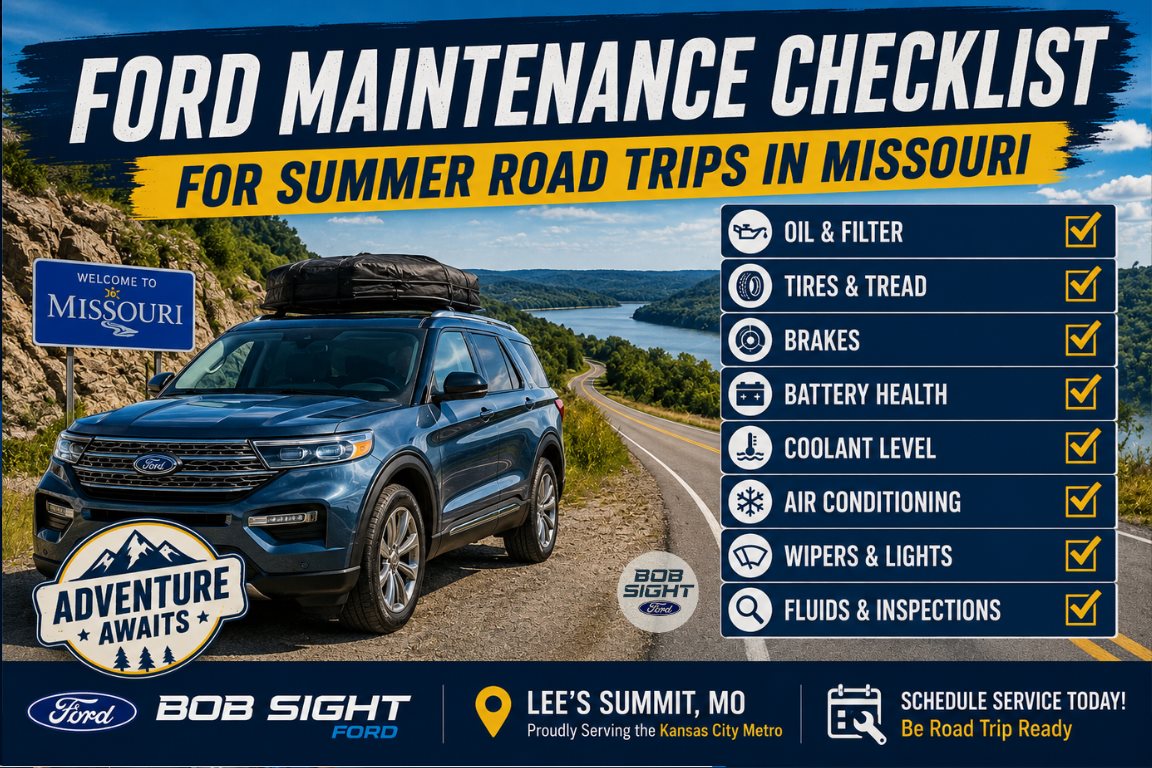
Missouri summer road trips can be tough on your Ford, which is why a complete Ford maintenance checklist matters before you leave Lee's Summit, Blue Springs, Independence, Raytown, Grain Valley, Belton, or anywhere in the Kansas City Metro. Heat, humidity, stop-and-go traffic, heavy cargo, long highway stretches, and sudden Midwest storms can all stress your tires, battery, brakes, fluids, air conditioning system, and engine cooling system. At Bob Sight Ford in Lee's Summit, our Ford service team helps local drivers prepare for summer travel with maintenance that supports comfort, reliability, and confidence before the miles add up.
Schedule Ford maintenance before your Missouri summer road trip
In This Guide You'll Learn
This Ford maintenance checklist is designed to help Missouri drivers prepare for summer road trips with practical, local, and vehicle-specific guidance.
- Which Ford maintenance items matter most before a summer road trip
- Why oil, coolant, tires, brakes, battery health, and air conditioning need attention in Missouri heat
- How Kansas City Metro traffic, Highway 50 travel, and lake trips can affect your vehicle
- What Ford-Certified Technicians inspect before long-distance driving
- How to prepare your Ford F-150, Explorer, Escape, Bronco, Ranger, Maverick, Expedition, or Super Duty for summer travel
- When to schedule service before a trip instead of waiting until warning signs appear
- How local Ford service support can make ownership easier before, during, and after road trip season
Why Summer Road Trips Require a Ford Maintenance Checklist
A Ford maintenance checklist helps Missouri drivers catch small issues before summer heat, highway speeds, and long-distance travel turn them into bigger problems. Before driving from Lee's Summit toward the Lake of the Ozarks, Branson, Kansas City, Columbia, or western Missouri campgrounds, your Ford should be checked for fluid condition, tire wear, battery strength, brake performance, cooling system health, and air conditioning function.
Summer driving creates a different workload than ordinary commuting. A Ford Explorer loaded with luggage and passengers works harder than it does during a short drive to Summit Fair. A Ford F-150 towing a boat or trailer through rolling Missouri highways puts added strain on the engine, transmission, brakes, tires, and cooling system. Even a Ford Escape or Maverick used mostly for daily commuting can feel the effects of heat, road construction, and long stretches of highway travel.
Missouri weather adds another layer of planning. Hot pavement can raise tire pressure, sudden storms can test wiper blades and tire tread, and humid conditions can make a weak air conditioning system more noticeable. Stop-and-go traffic near Independence Center or the I-470 and US-50 split can also increase engine temperature and brake use before you even reach open highway. A pre-trip inspection helps you understand whether your Ford is ready for that mix of conditions.
The goal is not to overcomplicate ownership. The goal is to prepare your vehicle so you can focus on the trip instead of worrying about warning lights, poor cooling, low tread, weak battery starts, or service needs away from home. At Bob Sight Ford, drivers can work with Ford-Certified Technicians who understand Ford maintenance schedules, Motorcraft parts, and the way Kansas City Metro drivers use their vehicles in summer.
Quick Facts
The most important Ford maintenance items before a summer road trip are oil condition, coolant level, tire tread, tire pressure, brake condition, battery health, wiper blades, air conditioning performance, and fluid levels. These items directly affect reliability, stopping confidence, comfort, and safety during hot-weather driving around Missouri.
- Summer heat can make weak batteries fail faster, even though many drivers only think about battery issues in winter.
- Tire pressure can change as pavement temperatures rise, so tires should be checked cold before a long drive.
- Ford oil changes help protect engines during highway miles, towing, idling, and hot-weather operation.
- Brake inspections matter before driving through hilly Missouri routes, lake roads, or heavy Kansas City traffic.
- Coolant system health is critical because overheating risk increases during summer travel and loaded driving.
- Wiper blades and washer fluid are important because Missouri storms can appear quickly during road trips.
- Air conditioning performance affects comfort, visibility, and driver alertness during humid summer conditions.
For many drivers, the best time to schedule Ford service is before the road trip season gets busy. Waiting until the night before a long drive can make service planning stressful, and it may not leave enough time for needed repairs, parts, or follow-up inspection. If your family is preparing for multiple trips, summer sports travel, camping weekends, or a long highway drive, scheduling early at a local Ford service center can make the process easier.
Oil and Filter Service: Protecting Your Ford Engine Before Long Drives
An oil and filter service is one of the most important steps in a Ford maintenance checklist because engine oil reduces friction, controls heat, suspends contaminants, and protects internal components during long summer drives. Missouri road trips can involve highway speeds, high temperatures, towing, loaded cargo, and long periods of idling, all of which make clean oil and the correct oil specification important.
Engine oil is not just a basic fluid. It is a protective layer that helps moving parts inside the engine operate smoothly. Ford engines may require specific oil viscosities such as 0W-20, 5W-20, or 5W-30 depending on model, engine, and manufacturer guidance, and the correct specification matters more than guessing from a generic oil shelf. Many modern oils also meet API and ILSAC standards designed to support fuel economy, emissions systems, engine cleanliness, and wear protection.
Summer driving can expose weak maintenance habits quickly. A Ford F-150 pulling a trailer toward a Missouri lake places more demand on engine lubrication than a short errand in Lee's Summit. A Ford Explorer carrying a full family through highway construction or hot traffic near Kansas City may spend time idling with the air conditioning running. Those conditions make the oil's ability to control heat and contaminants more important.
At Bob Sight Ford, Ford-Certified Technicians can help determine the correct oil and filter service for your model. Using the right Motorcraft filter and Ford-recommended oil specification helps support long-term engine health. If you are preparing for a road trip and cannot remember the last oil change, it is better to check before you leave than to wait until after hundreds of miles in summer heat.
Tires, Tread, and Pressure for Missouri Highway Confidence
Tire condition should be checked before every summer road trip because tires affect traction, braking, fuel efficiency, ride comfort, and control during storms or emergency maneuvers. For Ford drivers in Lee's Summit and the Kansas City Metro, tire inspections should include tread depth, pressure, sidewall condition, uneven wear, and tire age.
Tires face a difficult combination during Missouri summers. Hot pavement can increase tire pressure, long highway drives can build heat, and sudden rain can create slick surfaces where worn tread has less ability to move water away from the contact patch. If you are driving along Highway 50, crossing into Kansas City traffic, or heading toward rural campgrounds, your tires need to be ready for more than smooth pavement.
Tread depth matters because it helps maintain grip on wet roads. Low tread can make hydroplaning more likely during summer storms, and uneven wear may point to alignment, suspension, or inflation issues. Major tire brands such as Michelin, Goodyear, and Continental are often discussed in the context of comfort, durability, road noise, and all-season performance, but the right tire for your Ford depends on model, size, load rating, driving habits, and OEM recommendations.
Drivers should also check tire pressure when tires are cold, not after a long drive. The tire pressure number on the tire sidewall is not the same as the recommended operating pressure for your vehicle. Your Ford's recommended pressure is typically found on the driver's door jamb label, and following that guidance supports predictable handling and tire wear. If you notice vibration, pulling, cupping, or uneven tread before a trip, schedule a tire inspection before the miles add up.
| Road Trip Tire Check | Why It Matters | Missouri Driving Example |
|---|---|---|
| Tread depth | Supports wet-road traction and braking confidence | Sudden storms near Kansas City or Blue Springs |
| Cold tire pressure | Helps control heat buildup, wear, and fuel efficiency | Long Highway 50 drives in summer heat |
| Sidewall condition | Helps identify cracks, bulges, or impact damage | Jackson County potholes and construction zones |
| Uneven wear | May signal alignment or suspension concerns | Daily commuting around Raytown hills or I-470 |
Cooling System and Battery Checks in Missouri Heat
Your Ford cooling system and battery should be checked before summer travel because heat can stress both systems at the same time. Coolant helps manage engine temperature, while the battery powers starts, electronics, safety systems, and comfort features during hot-weather driving.
The cooling system includes more than coolant level. It can involve the radiator, hoses, thermostat, water pump, cooling fans, pressure cap, and coolant condition. When a vehicle is loaded with passengers or towing gear, the engine works harder and produces more heat. If coolant is low, contaminated, or not flowing properly, overheating risk can increase during highway driving, stop-and-go traffic, or steep grades.
Battery failure is also common in hot weather. Heat can accelerate internal battery wear, and a battery that seemed fine in spring may struggle after repeated hot starts. Drivers often associate dead batteries with cold mornings, but high temperatures can shorten battery life and expose weak reserve capacity. A battery test before a road trip can show whether the battery is holding charge properly and whether the charging system appears healthy.
For Missouri road trips, these checks matter because service options may be limited once you are away from home. A weak battery at a remote campground or an overheating concern on a rural road can turn a fun trip into a stressful situation. Bob Sight Ford can inspect cooling and battery components before travel so you have a clearer picture of your vehicle's readiness.
Brake Inspection Before Hills, Traffic, and Loaded Driving
A brake inspection should be part of every Ford maintenance checklist before a summer road trip because loaded vehicles, highway speeds, hills, and traffic can increase braking demands. Brake pads, rotors, calipers, brake fluid, and related components all contribute to stopping confidence during Missouri travel.
Brakes may feel normal during short city drives but show concerns during longer trips. A Ford Expedition loaded with passengers and cargo needs strong, predictable braking on highway exits and hilly roads. A Ford Ranger or F-150 towing a small trailer places additional demands on the brake system, even when the trailer is within the vehicle's towing limits. Stop-and-go traffic near Independence or downtown Kansas City can also heat brakes before a long trip even begins.
Brake fluid is another important part of the system. It transfers force from the pedal to the braking components, and over time it can absorb moisture. Moisture contamination can affect brake performance and component life, which is why fluid condition should not be ignored. If the brake pedal feels soft, the vehicle pulls when braking, or you hear grinding, squealing, or scraping, service should be scheduled before leaving town.
A Ford service center can inspect pad thickness, rotor condition, brake fluid, calipers, and visible lines or hoses. Ford-Certified Technicians can also help identify whether a sound is normal wear, a hardware concern, or something that needs attention before travel. For drivers preparing for a summer road trip, brakes are not an area where guessing is worthwhile.
Step-by-Step: How to Prepare Your Ford One Week Before a Road Trip
The best time to complete a Ford road trip checklist is about one week before departure because it gives you time to inspect, schedule service, address maintenance, and recheck the vehicle without last-minute stress. A one-week window is useful for families, commuters, and truck owners planning travel from Lee's Summit to destinations across Missouri or beyond.
Start by reviewing your planned route and vehicle use. A light weekend trip to a nearby park may require basic checks, while a long drive with passengers, luggage, bikes, camping gear, or towing needs a deeper inspection. If you plan to drive through rural highways, lake areas, or construction zones, reliability and tire condition become even more important.
- Check your dashboard and owner information. Look for warning lights, maintenance reminders, and any messages that need attention before travel.
- Review your last service date. If your oil change, tire rotations, or inspection history is unclear, schedule Ford maintenance before the trip.
- Inspect tires cold. Check tread depth, pressure, sidewalls, and visible damage before the vehicle has been driven for the day.
- Test lights and wipers. Confirm headlights, brake lights, turn signals, hazard lights, wiper blades, and washer fluid are ready for storms.
- Check comfort systems. Run the air conditioning, defroster, USB ports, navigation, and charging points before loading the vehicle.
- Schedule service if anything feels questionable. Do not wait until the day before travel if you notice noises, leaks, vibrations, or warning lights.
This process helps you avoid common road trip problems. A driver leaving from Grain Valley may notice tire vibration before a long highway drive. A family in Belton may realize the air conditioning is not cooling evenly before a July trip. A commuter near Lee's Summit may see a maintenance reminder and schedule service before a weekend departure instead of hoping it can wait.
Air Conditioning, Wipers, Lights, and Visibility
Comfort and visibility systems deserve attention before summer travel because Missouri heat, humidity, rain, and night driving can quickly expose weak air conditioning, worn wipers, or failing lights. A road trip-ready Ford should keep passengers comfortable and help the driver see clearly in changing weather.
Air conditioning is more than a comfort feature during hot weather. A properly working system helps reduce fatigue, keeps passengers comfortable, and supports windshield defogging when humidity rises. If your Ford takes too long to cool, blows warm air, has weak airflow, or produces unusual smells, it should be inspected before a long drive. Cabin air filter condition can also affect airflow and interior air quality.
Wiper blades matter because Missouri summer storms can arrive quickly. Worn blades may chatter, streak, skip, or leave water across the windshield. Washer fluid should also be topped off with a proper fluid, not plain water, because road grime, bugs, and dust can build up quickly during highway driving. Visibility is a safety issue, not just a convenience item.
Exterior lighting should be checked before travel, including headlights, brake lights, turn signals, reverse lights, and hazard lights. This is important for early morning departures, late-night returns, rural roads, and rainy conditions. If your trip includes driving near wooded roads, campgrounds, or lake areas, lighting performance can help you respond sooner to curves, wildlife, pedestrians, and other vehicles.
Ford Truck and SUV Road Trip Needs: F-150, Explorer, Escape, Bronco, Ranger, and More
Different Ford models need different road trip preparation because trucks, SUVs, hybrids, and adventure vehicles are used in different ways. A Ford F-150 towing equipment, a Ford Explorer carrying family cargo, and a Ford Bronco heading to a trail entrance may all need the same basic maintenance checks, but the priority details can vary.
Ford F-150 and Super Duty drivers should pay attention to towing-related maintenance. Trailer connections, tire load ratings, brake condition, transmission fluid guidance, coolant performance, and engine oil condition all matter when pulling weight in summer heat. Drivers should also confirm trailer lights, hitch connections, safety chains, and trailer tire pressure before heading toward Missouri lakes or jobsite routes.
Ford Explorer, Expedition, Escape, and Bronco Sport drivers often focus on family comfort, cargo space, and long-distance usability. These vehicles should be checked for tire condition, brakes, air conditioning performance, battery health, and fluid levels before travel. If the SUV carries passengers, pets, luggage, and roof cargo, the added load can affect braking distance, tire pressure needs, and overall handling.
Ford Bronco and Ranger drivers may have more trail or gravel-road use built into their summer plans. These drivers should inspect tires, underbody areas, recovery gear, fluid levels, and drivetrain function when preparing for outdoor routes. If you are shopping for a Ford that better fits summer travel, you can also browse new Ford inventory or explore Ford F-150 inventory at Bob Sight Ford.
| Ford Model Type | Summer Road Trip Focus | Maintenance Priority |
|---|---|---|
| Ford F-150 and Super Duty | Towing, hauling, highway loads, work travel | Oil, brakes, tires, cooling system, trailer checks |
| Ford Explorer and Expedition | Family travel, cargo, passengers, road trips | Brakes, tires, air conditioning, battery, fluids |
| Ford Escape and Bronco Sport | Commuting, efficiency, weekend travel | Oil, tire pressure, cabin filter, wipers, battery |
| Ford Bronco and Ranger | Adventure driving, gravel roads, outdoor gear | Tires, drivetrain checks, fluids, underbody inspection |
Step-by-Step: What to Pack in a Ford Road Trip Emergency Kit
A good Ford road trip emergency kit helps Missouri drivers handle delays, weather changes, minor roadside issues, and passenger needs while waiting for help or safely reaching service. This kit should be practical, organized, and matched to the route, season, passengers, and vehicle type.
Emergency kits are not just for remote travel. A flat tire near a busy Kansas City interchange, a dead phone battery on a rural highway, or a sudden storm near a lake can create stress even when you are not far from home. The right items can make a delay safer and more manageable. Families traveling with children or pets should add supplies that match those needs.
- Pack visibility and safety items. Include reflective triangles, a flashlight, extra batteries, a safety vest, and basic gloves.
- Bring communication support. Carry a charged power bank, charging cables, and a written list of important numbers in case phones lose charge.
- Add basic comfort supplies. Include water, snacks, sunscreen, wipes, paper towels, and a small first-aid kit.
- Prepare for tire concerns. Confirm your spare tire, jack, inflator kit, or roadside assistance information before leaving.
- Include weather-ready items. Pack a light blanket, rain poncho, and extra washer fluid for changing Missouri conditions.
- Secure the kit properly. Keep supplies accessible but safely stored so they do not shift during braking or turns.
Drivers should also check their vehicle documents and service records before departure. Keep insurance information, registration, roadside assistance details, and any trip-specific paperwork easy to find. If your vehicle has not been inspected recently, an emergency kit is helpful, but it should not replace pre-trip maintenance. Prevention is still the better plan.
Ownership Planning
Ownership planning helps Ford drivers stay ahead of summer maintenance instead of reacting to problems during travel. A smart plan includes routine service intervals, seasonal inspections, tire rotations, battery testing, brake checks, and service scheduling before busy travel periods.
Service intervals are the manufacturer-recommended timing or mileage points for maintenance items such as oil changes, filters, inspections, fluids, and tire rotations. These intervals can vary by model, engine, driving habits, and operating conditions. Missouri drivers who tow, idle often, drive in heat, use gravel roads, or carry heavy loads may need to pay closer attention to severe-use guidance. This is one reason a local Ford service center can be helpful.
Planning also means keeping convenience in mind. Bob Sight Ford offers helpful service resources for drivers who need to fit maintenance into a busy schedule. Ford pickup and delivery options can support local owners when available, and online scheduling makes it easier to choose a time before a trip. Drivers can also review current Ford Employee Pricing details if they are considering whether to maintain their current vehicle or explore a newer Ford before the next travel season.
Long-term ownership is easier when maintenance is predictable. A family that schedules service before summer, checks tires before fall sports travel, and tests the battery before winter is less likely to be surprised by seasonal problems. Whether you drive a Ford Escape, Explorer, F-150, Bronco, Maverick, Ranger, Mustang Mach-E, Expedition, or Super Duty, a consistent maintenance plan helps your vehicle stay ready for the way you actually drive in Missouri.
Frequently Asked Questions
What Ford maintenance should I do before a summer road trip near me?
Before a summer road trip near Lee's Summit or the Kansas City Metro, your Ford should have its oil, tires, brakes, battery, coolant, wipers, lights, air conditioning, and major fluids checked. These items have the biggest effect on reliability, comfort, and confidence during hot-weather travel. A pre-trip inspection can also identify leaks, worn components, warning lights, and maintenance reminders before you leave town. This is helpful whether you are driving across Missouri or staying closer to home.
The most important maintenance items depend on your vehicle and route. If you drive a Ford F-150, towing preparation may be a priority. If you drive a Ford Explorer or Expedition, passenger comfort, brake condition, tires, and air conditioning may matter most. If you drive a Ford Bronco or Ranger, tire condition and underbody inspection may be more relevant after gravel or trail use.
For Missouri drivers, local conditions should guide the inspection. Summer heat around Jackson County can stress batteries and cooling systems, while sudden storms can test wiper blades and tire tread. Heavy traffic near Independence Center or the I-470 and US-50 split can also increase brake and cooling system demand. Scheduling service before travel gives Ford-Certified Technicians time to inspect your vehicle properly.
How soon before a road trip should I schedule Ford service?
You should schedule Ford service about one to two weeks before a major summer road trip whenever possible. This timing gives you room to complete inspections, address needed maintenance, and avoid last-minute stress. If parts, tires, brakes, or additional service are needed, you will have more flexibility. Waiting until the day before travel can make the process harder than it needs to be.
A one-to-two-week window is useful because not every maintenance need is obvious from the driver's seat. Tires may show uneven wear, a battery may test weak, or brake pads may be near the point where replacement should be discussed. A technician may also notice fluid concerns, filters, belts, hoses, or other items that deserve attention before long-distance driving. Early scheduling helps you make informed decisions.
For drivers near Lee's Summit, Blue Springs, Raytown, Grain Valley, and Belton, summer calendars can fill quickly with vacations, sports travel, family visits, and weekend lake trips. Scheduling early at Bob Sight Ford helps align maintenance with your travel plans. It also gives you time to ask questions about your specific Ford model, route, and driving conditions. That preparation can make the trip feel more relaxed from the start.
Why does my Ford battery need to be checked in summer?
Your Ford battery should be checked in summer because heat can accelerate internal battery wear and reveal weak starting power. Many drivers think batteries only fail in winter, but high temperatures can shorten battery life and stress the charging system. A battery that seems fine during mild weather may struggle after repeated hot starts. Testing the battery before a road trip is a simple way to reduce risk.
Modern Ford vehicles rely on battery health for more than starting the engine. Electronics, driver-assist systems, infotainment, charging ports, lighting, and comfort features all depend on stable electrical performance. If the battery is weak, you may notice slow cranking, dim lights, warning messages, or intermittent issues. A battery test can help determine whether the battery and charging system are ready for travel.
In Missouri summer conditions, battery concerns can appear during errands, road trips, or long periods parked in the sun. A family leaving Lee's Summit for a weekend trip may stop for fuel, only to discover a weak battery after a hot soak. A driver parked near a lake or campground may not have easy access to immediate service. That is why battery testing belongs on a road trip checklist.
Do I need a tire rotation before a summer road trip?
You may need a tire rotation before a summer road trip if your tires are due based on mileage, showing uneven wear, or have not been rotated recently. Tire rotations help promote more even wear, which can support traction, ride comfort, and longer tire life. They are often recommended as part of routine Ford maintenance. The correct rotation pattern can depend on drivetrain, tire type, and vehicle guidance.
A tire rotation is also a good opportunity for inspection. Technicians can check tread depth, pressure, sidewall condition, visible punctures, uneven wear patterns, and signs of alignment concerns. This matters before long highway drives because a tire issue can worsen with heat and mileage. If a tire is damaged or worn unevenly, rotation alone may not solve the underlying concern.
For Missouri road trips, tires face hot pavement, rain, highway speeds, and occasional rough surfaces. Drivers traveling along Highway 50, I-470, or rural routes near lakes and campgrounds should have confidence in tread and pressure before leaving. Tire rotations are also commonly discussed with oil changes, making it easier to bundle maintenance before travel. Bob Sight Ford can help determine whether tire rotations are due for your Ford.
Is dealership service better than a quick lube before a road trip?
Dealership service can be a stronger choice before a road trip because Ford-Certified Technicians understand Ford maintenance guidance, model-specific systems, Motorcraft parts, and factory inspection points. A quick lube may handle basic oil service, but a dealership service visit can provide a more complete pre-trip maintenance review. That matters when you want more than a fast stop before hundreds of miles. A Ford service center can help connect maintenance to your vehicle's actual needs.
Before a summer road trip, the inspection matters as much as the oil change. Tires, brakes, battery, coolant, belts, hoses, filters, lights, wipers, and fluids all contribute to trip readiness. A dealership technician can look at the vehicle as a complete system instead of treating service as one isolated task. This can be valuable for newer Ford models, towing vehicles, hybrids, SUVs, and trucks with specific maintenance needs.
For Kansas City Metro drivers, local dealership service also supports ownership continuity. Bob Sight Ford can help maintain service history, answer model-specific questions, and recommend maintenance based on Missouri driving conditions. If your Ford regularly handles commuting, summer travel, towing, or family trips, that familiarity can be helpful. A quick visit may seem convenient, but a more complete service approach can provide better road trip confidence.
Get Road Trip Ready at Bob Sight Ford in Lee's Summit
Bob Sight Ford helps Missouri drivers prepare for summer road trips with local Ford service, Ford-Certified Technicians, and maintenance support built around real Kansas City Metro driving conditions. Whether you drive a Ford truck, SUV, hybrid, performance vehicle, or work vehicle, a pre-trip service visit can help you leave with more confidence.
Buying and servicing local matters because your vehicle is used in local conditions. Lee's Summit drivers deal with hot pavement, summer storms, road construction, potholes, highway commuting, and weekend routes toward lakes, parks, and family destinations. A local Ford service center understands those conditions and can help prioritize the maintenance items that matter most before travel.
Bob Sight Ford serves drivers from Lee's Summit, Blue Springs, Independence, Raytown, Grain Valley, Belton, Kansas City, and surrounding western Missouri communities. If your summer plans include a road trip, camping weekend, lake visit, sports tournament, family vacation, or long commute, schedule service before the miles begin. A well-maintained Ford can make the difference between a stressful trip and a smoother, more comfortable drive.
Helpful Links
- Schedule Ford Service
- Ford Pickup and Delivery
- Service and Parts Specials
- Parts Department
- New Ford Inventory
Proud to be part of the Bob Sight Auto Group
Bob Sight Ford is proud to be part of the Bob Sight Auto Group, serving drivers across Lee's Summit, Lawrence, Independence, and the greater Kansas City Metro. Our group helps local shoppers and owners find trusted automotive resources for Ford sales, service, collision repair, and additional Bob Sight dealership support throughout the region.