How to Get the Best Trade-In Value When Buying a Used Vehicle Near Kansas City
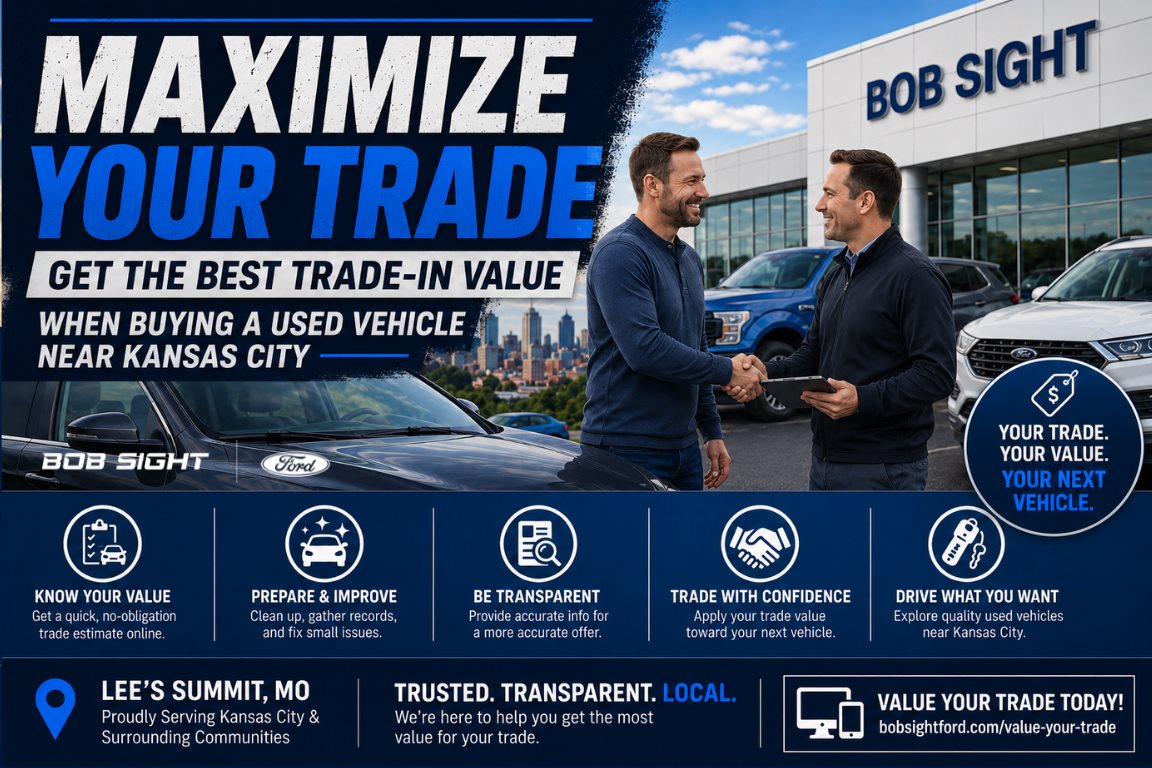
Shop used vehicles near Kansas City and value your trade at Bob Sight Ford
Getting the best trade-in value when buying a used vehicle near Kansas City starts with preparation, honest condition details, maintenance records, market awareness, and choosing a local dealership that can connect your current vehicle to your next purchase. At Bob Sight Ford in Lee’s Summit, Missouri, shoppers from Kansas City, Blue Springs, Independence, Raytown, Grain Valley, and nearby Jackson County communities can use trade-in tools, used inventory, financing resources, and dealership support to make the process clearer.
For many drivers, trading in a current vehicle is one of the easiest ways to simplify the used car buying process. Instead of selling your vehicle privately, meeting strangers, handling payment, and coordinating paperwork separately, a trade-in lets you work through the current vehicle and next vehicle in one dealership process. That can save time and reduce stress, especially for busy Kansas City Metro shoppers.
This guide explains how to prepare your vehicle, what affects trade-in value, how to compare your next used vehicle options, and why Bob Sight Ford can help shoppers move from trade-in planning to a more confident used vehicle purchase.
In This Guide You’ll Learn
- What trade-in value means when buying a used vehicle
- How to prepare your current vehicle before a trade appraisal
- Why mileage, condition, maintenance, and market demand matter
- How trade-in value can support a used vehicle purchase
- Why dealership trade-ins can be easier than private selling
- How financing and trade-in planning work together
- Which Bob Sight Ford resources help with used inventory, trade-ins, financing, and service
What Trade-In Value Means When Buying a Used Vehicle
Trade-in value is the amount a dealership may offer for your current vehicle to apply toward your next vehicle purchase. It is based on factors like year, make, model, mileage, condition, service history, market demand, vehicle history, features, and local resale opportunity. For shoppers buying a used vehicle near Kansas City, trade-in value can help make the purchase process more convenient and organized.
A trade-in is different from selling privately. When you sell privately, you are responsible for advertising the vehicle, responding to messages, scheduling test drives, negotiating, verifying payment, and handling documents. When you trade in at a dealership, the dealership evaluates the vehicle and can apply its value toward the next purchase if everything lines up. That makes the process easier for many drivers who want to replace their current vehicle without managing two separate transactions.
For Kansas City Metro shoppers, trade-in value can matter in several ways. A family in Lee’s Summit may want to trade an older SUV toward a used Ford Explorer. A commuter near Independence may want to move from a sedan into a used Ford Escape. A truck owner in Blue Springs may want to trade an older pickup toward a used Ford F-150. The trade-in can become part of the overall purchase plan.
It is important to understand that trade-in value is not random. Dealers evaluate vehicles based on real condition and marketability. A clean, well-maintained vehicle with strong demand may perform better than a vehicle with accident history, heavy wear, warning lights, missing records, or unclear title details. Knowing what affects value helps shoppers prepare more strategically.
| Trade-In Factor | Why It Matters | What Shoppers Can Do |
|---|---|---|
| Mileage | Helps estimate use and remaining ownership appeal | Report mileage accurately |
| Condition | Affects resale readiness and reconditioning needs | Clean the vehicle and disclose issues honestly |
| Maintenance history | Shows how the vehicle was cared for | Bring available service records |
| Vehicle history | Provides title, accident, and ownership context | Be ready to discuss known history |
| Market demand | Popular models may have stronger resale interest | Compare current local inventory trends |
Trade-in value is one part of the used vehicle buying process, but it can be an important one. When shoppers understand how it works, they can make smarter decisions before visiting the dealership.
Start With an Online Trade-In Estimate
An online trade-in estimate is a smart first step because it helps shoppers begin planning before visiting the dealership. It gives you a starting point based on your vehicle’s basic details and can help you think through your next used vehicle purchase more clearly. At Bob Sight Ford, shoppers can use the Value Your Trade tool to begin the process online.
Online trade tools typically ask for information like year, make, model, trim, mileage, condition, features, and vehicle history. The more accurate your information is, the more useful the estimate can be. Guessing, minimizing damage, or entering incorrect mileage can create confusion later. A realistic estimate is more valuable than an overly optimistic one because it helps you plan more honestly.
For drivers around Lee’s Summit, Kansas City, Blue Springs, Independence, Raytown, and Grain Valley, starting online can save time. You can begin thinking about how your current vehicle may support your next purchase before you visit the dealership. If you are shopping used Ford trucks, used Ford SUVs, or affordable used vehicles, this step helps connect the trade-in conversation to the inventory search.
After you receive an online estimate, the dealership will still need to review the vehicle in person. This matters because condition, tires, brakes, warning lights, title details, accident history, interior wear, and mechanical function are easier to evaluate with the vehicle present. The online estimate is a planning tool, while the in-person appraisal helps refine the actual trade value.
- Gather your vehicle information. Write down the year, make, model, trim, mileage, and VIN if available.
- Be honest about condition. Include dents, scratches, tire wear, warning lights, interior damage, or mechanical issues.
- Use the online tool. Start with Bob Sight Ford’s trade value resource before visiting.
- Save the estimate. Keep the information handy when comparing used vehicle options.
- Schedule time for an appraisal. The dealership can review the vehicle in person and answer questions.
Using an online trade-in estimate does not obligate you to buy immediately. It simply gives you better information. That information can help you shop with more confidence and avoid walking into the process unprepared.
Clean and Prepare Your Vehicle Before the Appraisal
Cleaning and preparing your vehicle before a trade-in appraisal can help present it accurately and make the review process easier. You do not need to make the vehicle perfect, but you should remove clutter, clean visible surfaces, gather documents, and make sure the vehicle is easy to inspect. A clean vehicle helps the appraiser see condition more clearly.
Start by removing personal items from the cabin, trunk, glove box, center console, seatback pockets, and cargo area. Families often forget school papers, sports equipment, chargers, toys, pet items, receipts, and garage remotes. Truck owners should check under seats, bed storage, toolboxes, and center consoles. Clearing these areas helps the appraisal move smoothly and prevents personal items from being left behind.
Washing the exterior and vacuuming the interior can also help. This does not mean spending a lot of money on detailing. It means presenting the vehicle in a way that shows its real condition. Dirt, clutter, and heavy messes can make the vehicle harder to evaluate. A clean vehicle can also signal that it has been cared for, although condition and history still matter most.
Do not hide problems. If there is a warning light, known mechanical issue, cracked windshield, damaged bumper, missing key, or tire concern, be upfront. Dealership appraisals are based on actual condition, and undisclosed issues may be discovered during review. Honest communication keeps the process clearer and helps avoid surprises.
| Preparation Step | Why It Helps |
|---|---|
| Remove personal items | Makes the vehicle easier to inspect and prevents lost belongings |
| Wash the exterior | Allows paint, body condition, and glass to be reviewed clearly |
| Vacuum the interior | Helps show seat, carpet, and cabin condition |
| Gather keys and manuals | Complete accessories can support a smoother appraisal |
| Bring service records | Maintenance documentation can help tell the vehicle’s story |
For busy Kansas City Metro drivers, preparation does not have to be complicated. A clean, organized, honest vehicle presentation is enough. The goal is to make the appraisal clear, not to disguise normal wear.
Bring Maintenance Records and Ownership Details
Maintenance records can help support trade-in value by showing how your vehicle was cared for over time. Service history gives the dealership more context about oil changes, tire rotations, brake work, battery replacement, fluid services, inspections, and repairs. A vehicle with clear maintenance records can be easier to evaluate than one with little documentation.
Records do not have to be perfect to be useful. Printed invoices, digital receipts, service reminders, dealership records, and maintenance logs can all help. If your vehicle was serviced regularly at a dealership or repair facility, bring what you have. If you handled some maintenance yourself, note what was completed and when. Honest records help tell the ownership story.
This is especially important in Missouri because local weather and roads affect vehicle systems. Summer heat can stress batteries, tires, air conditioning, and cooling systems. Winter cold can affect tire pressure, starting performance, and fluids. Road salt, potholes, rain, and construction zones can influence brakes, suspension, alignment, and underbody condition. Records can help show how those needs were managed.
Ownership details also matter. If you have two keys, owner’s manuals, floor mats, bed covers, cargo accessories, trailer equipment, or recent tire information, bring those details. Accessories and complete vehicle materials may help the dealership understand the full vehicle package. For truck owners, towing equipment and bed accessories may be worth discussing during the appraisal.
- Collect service invoices. Include oil changes, tire rotations, brake work, battery replacement, and major repairs.
- Bring recent inspection details. If the vehicle recently had tires, brakes, or fluids checked, include that information.
- Gather accessories. Bring extra keys, manuals, floor mats, bed covers, or removable cargo items.
- Know your payoff amount. If you still owe money on the vehicle, bring current payoff information if available.
- Share known issues. Be honest about warning lights, noises, damage, or repair needs.
Maintenance records are not the only factor in trade-in value, but they can help build confidence in the vehicle’s care. For shoppers planning a used vehicle purchase, strong documentation can make the trade-in conversation more complete.
Understand How Mileage and Condition Affect Trade-In Value
Mileage and condition are two of the biggest factors that affect trade-in value, but they should always be evaluated together. A lower-mileage vehicle may not perform well if it has poor condition or limited maintenance history. A higher-mileage vehicle may still have strong value if it has been cared for, drives well, and fits current market demand.
Mileage helps estimate how much a vehicle has been used. However, use type matters. Highway commuting can create different wear than short-trip city driving, towing, work use, school runs, or delivery use. A truck used for heavy hauling may show different wear than a sedan used mainly for commuting between Lee’s Summit and Kansas City. That is why appraisals look beyond the odometer.
Condition includes exterior, interior, mechanical, and technology factors. Dents, scratches, windshield chips, tire wear, brake condition, warning lights, upholstery damage, odors, suspension noise, and missing equipment can all influence value. Normal wear is expected on a used vehicle, but excessive damage or unclear mechanical issues may reduce trade-in strength.
Market demand also matters. Trucks, SUVs, efficient commuter vehicles, family-friendly models, and vehicles with popular features may perform differently depending on current inventory needs. A clean used truck may be appealing to local shoppers who need work capability. A well-kept SUV may be attractive to families around Kansas City, Blue Springs, and Independence. Demand can change, so local appraisal context is important.
| Condition Area | Examples | Potential Trade-In Impact |
|---|---|---|
| Exterior | Dents, scratches, rust, glass chips, paint condition | Affects visual appeal and reconditioning needs |
| Interior | Seat wear, odors, stains, electronics, storage areas | Affects shopper appeal and cleanup needs |
| Mechanical | Engine, transmission, brakes, suspension, warning lights | Affects readiness and repair needs |
| Tires | Tread depth, age, matching set, uneven wear | Affects safety, appearance, and reconditioning |
| History | Accidents, title status, ownership pattern, service records | Adds context to value and marketability |
Shoppers should avoid focusing on one factor alone. Mileage, condition, maintenance, history, and demand work together. The more prepared you are to discuss those details, the easier the trade-in process becomes.
Know Your Payoff and Equity Before Trading In
If you still owe money on your current vehicle, knowing your payoff and equity before trading in helps you understand how the trade may affect your next used vehicle purchase. Payoff is the amount still owed on your current loan. Equity is the difference between your vehicle’s trade-in value and the payoff amount.
Positive equity means the vehicle’s trade-in value is higher than the payoff. That difference may be applied toward the next purchase when appropriate. Negative equity means the payoff is higher than the trade-in value. This does not automatically prevent a purchase, but it is important to understand before choosing your next used vehicle.
For Kansas City Metro shoppers, payoff information can make the dealership visit more productive. If you are replacing a truck, SUV, or car, knowing your payoff gives the finance team more complete information. It also helps you compare used vehicle options more realistically. A shopper moving from an older vehicle into a used Ford Explorer, F-150, Escape, Ranger, or Maverick should understand how the trade fits the overall plan.
If you are unsure of your payoff, contact your lender before visiting or check your loan account online. Payoff amounts can differ from the balance shown on a monthly statement because interest may accrue daily. A current payoff gives the dealership more accurate information for planning.
- Contact your lender. Request the current payoff amount and payoff expiration date.
- Compare payoff to estimated trade value. This helps you understand possible equity.
- Bring lender details. Account information can help the dealership process the trade more efficiently.
- Discuss equity honestly. Positive or negative equity can influence your purchase plan.
- Compare used vehicle options with the trade included. This gives a clearer picture of the full transaction.
Payoff and equity planning help reduce surprises. A trade-in is not only about what your vehicle is worth. It is also about how that value connects to your current loan and your next purchase.
Use Trade-In Value to Shop Used Vehicles More Strategically
Trade-in value can help shoppers choose a used vehicle more strategically because it connects the current vehicle to the next purchase plan. Instead of shopping blindly, you can compare used vehicle options with a better understanding of how your trade may support the transaction. This can make the buying process feel more organized.
At Bob Sight Ford, shoppers can browse pre-owned inventory and compare options based on their needs. A trade-in may help a family move into a used Ford SUV with more space. It may help a truck buyer upgrade to a used Ford F-150 with better towing equipment. It may help a commuter choose a used vehicle that fits daily Kansas City driving more comfortably.
Trade-in planning also helps shoppers avoid choosing based on one number alone. A vehicle with a lower advertised price may not be the best fit if it lacks features, has higher mileage, or does not meet long-term needs. A different used vehicle may offer better overall value when trade-in, financing, condition, mileage, and ownership goals are considered together.
For drivers searching used cars near Kansas City, the goal should be a complete plan. Trade-in value, financing, vehicle history, condition, test drive comfort, and future service needs all matter. When these pieces line up, shoppers can buy with more confidence.
| Shopper Goal | How Trade-In Value Helps | Used Vehicle Path |
|---|---|---|
| More family space | Can support moving from a sedan to an SUV | Used Ford Explorer, Escape, Expedition, or other SUV |
| Better work capability | Can help replace an older truck | Used Ford F-150, Ranger, Maverick, or Super Duty |
| Daily commuting | Can help shift into a more comfortable used vehicle | Used car, crossover, or efficient SUV |
| Budget-focused purchase | Can reduce the amount needed for the next vehicle | Affordable used inventory options |
A trade-in can be a powerful planning tool when used correctly. It helps turn your current vehicle into part of your next vehicle strategy. That is why shoppers should value the trade early instead of waiting until the end.
Why Trading In Can Be Easier Than Selling Privately
Trading in can be easier than selling privately because it keeps the current vehicle, next vehicle, paperwork, financing, and timing in one dealership process. Private selling may lead to a higher offer in some cases, but it also requires more work, more time, and more responsibility from the seller. For many busy Kansas City drivers, convenience matters.
Private selling means writing the listing, taking photos, answering messages, scheduling test drives, meeting buyers, negotiating, verifying payment, and handling title transfer. It can also involve safety concerns, no-shows, low offers, and repeated questions. If you still owe money on the vehicle, the process can become more complicated because payoff and lien release need to be handled correctly.
Trading in at a dealership simplifies the timeline. You can appraise your current vehicle and shop for your next used vehicle in one place. You can also connect the trade-in conversation to financing and paperwork. This is especially helpful for families, commuters, and workers who do not want to spend weeks trying to sell privately.
For drivers from Lee’s Summit, Blue Springs, Independence, Raytown, and Grain Valley, a dealership trade-in can save travel time and reduce back-and-forth communication. Instead of coordinating multiple buyer meetings across the metro, you can focus on choosing the right next vehicle. That is often worth a lot in real life.
| Process Step | Trading In | Selling Privately |
|---|---|---|
| Finding a buyer | Dealership appraises the vehicle | Seller must advertise and respond to buyers |
| Test drives | Handled through appraisal process | Seller schedules with individual shoppers |
| Payment | Connected to dealership purchase process | Seller must verify funds safely |
| Paperwork | Dealer assists with transaction documents | Seller and buyer handle documents independently |
| Timing | Current and next vehicle can be handled together | Sale and purchase may happen on different timelines |
Private selling can make sense for some shoppers, but trade-ins are often more convenient. When the goal is to buy a used vehicle near Kansas City without extra stress, trading in through Bob Sight Ford can make the process much smoother.
Financing and Trade-In Planning Work Together
Financing and trade-in planning work together because your current vehicle’s value can affect the overall purchase structure of your next used vehicle. A trade-in may influence down payment planning, amount financed, monthly budget comfort, and vehicle options. That is why it helps to discuss both early in the shopping process.
Bob Sight Ford provides helpful finance resources, including Get Pre-Approved. Starting financing preparation online can help shoppers understand possible next steps before visiting. When paired with a trade-in estimate, this gives buyers a clearer picture of how their current vehicle and next vehicle may connect.
This is useful for shoppers comparing several used vehicle options. A driver may be deciding between a used Ford Escape and a used Ford Explorer. A truck shopper may be comparing a used Ford F-150 and a used Ford Ranger. A trade-in can change which vehicle feels like the best overall fit, especially when mileage, features, condition, and ownership plans are considered.
Financing should also include long-term thinking. A used vehicle purchase is not only about the day you buy. Shoppers should think about fuel, tires, brakes, insurance, maintenance, service access, and how long they plan to keep the vehicle. A trade-in may help with the purchase, but the next vehicle still needs to fit everyday life.
- Value your trade first. Start with a realistic understanding of your current vehicle.
- Begin finance preparation. Use online pre-approval tools before visiting.
- Compare used vehicles with the full picture in mind. Consider mileage, condition, features, and ownership needs.
- Ask how the trade affects the purchase plan. Understand how your current vehicle connects to the next one.
- Choose based on total fit. The best used vehicle should work for your budget, lifestyle, and long-term needs.
When financing and trade-in planning are handled together, the process becomes clearer. Shoppers can make decisions with better information instead of guessing how the numbers and vehicle choices connect.
Quick Facts About Getting the Best Trade-In Value Near Kansas City
Getting the best trade-in value near Kansas City depends on accurate information, clean presentation, maintenance records, honest condition details, current payoff awareness, and market demand. Shoppers who prepare before visiting the dealership usually understand the process better. Preparation can help make the trade-in and used vehicle purchase feel more confident.
- Start with Bob Sight Ford’s online Value Your Trade tool.
- Enter accurate mileage, trim, condition, and vehicle details.
- Remove personal items before the in-person appraisal.
- Clean the vehicle so condition can be reviewed clearly.
- Bring service records, extra keys, manuals, and accessory information.
- Know your loan payoff if you still owe money on the vehicle.
- Understand that mileage, condition, history, and demand all affect trade-in value.
- Use trade-in value to compare used vehicles more strategically.
- Pair trade-in planning with financing preparation for a clearer purchase process.
These quick facts show that trade-in value is not something shoppers have to approach blindly. The more prepared you are, the more useful the appraisal conversation becomes. That preparation helps connect your current vehicle to your next used vehicle purchase.
Bob Sight Ford gives Lee’s Summit and Kansas City Metro shoppers a local place to value a trade, compare used inventory, explore financing, and plan ownership. For drivers searching used cars near Kansas City, this can make the process much easier from start to finish.
Ownership Planning After You Trade In and Buy Used
Ownership planning helps used vehicle buyers protect long-term value after trading in and purchasing their next vehicle. Once you move from your current vehicle into a used car, truck, or SUV, maintenance becomes the next important step. A smart trade-in and purchase decision should also include a plan for keeping the next vehicle ready for daily life.
Missouri driving conditions make maintenance important. Summer heat can affect batteries, tires, cooling systems, and air conditioning. Winter cold can affect tire pressure, starting performance, and traction. Road salt, potholes, rain, and construction zones around Kansas City can affect brakes, suspension, alignment, and underbody condition. Regular service helps keep a used vehicle dependable.
Different vehicles need different ownership planning. A used Ford truck may need attention to towing equipment, tires, payload needs, brake condition, drivetrain systems, and bed use. A used Ford SUV may need tire rotations, brake inspections, filters, battery checks, and family-focused interior care. A commuter vehicle may need consistent oil changes, fuel system care, and tire maintenance due to daily mileage.
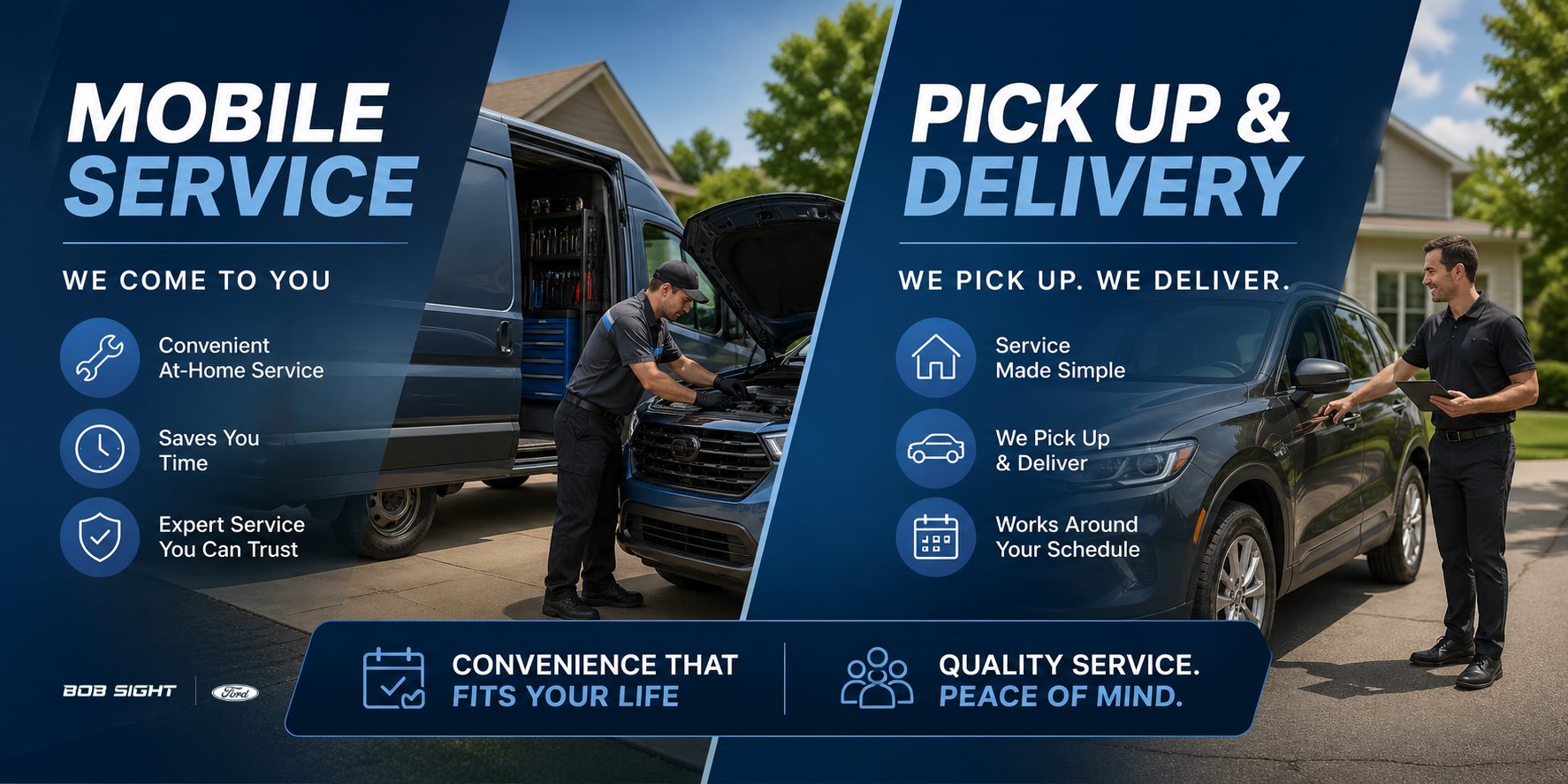
Bob Sight Ford supports ownership through local service resources. Shoppers can use Schedule Service, review Service and Parts Specials, and access the Parts Department. Having a local dealership resource in Lee’s Summit can help keep ownership more convenient.
Trade-in planning is the beginning of a better used vehicle purchase, not the end. Once you choose your next vehicle, routine maintenance and local service support help protect your investment and confidence over time.
Frequently Asked Questions About Trade-Ins Near Kansas City
How do I get the best trade-in value when buying a used vehicle?
You can get the best trade-in value by entering accurate vehicle details, cleaning your vehicle, bringing maintenance records, knowing your payoff, and being honest about condition. Trade-in value is based on mileage, condition, history, demand, features, and resale readiness. Preparation helps make the appraisal process clearer.
Start with an online trade-in estimate to understand a possible starting point. Then prepare your vehicle for an in-person review by removing personal items, cleaning the interior and exterior, and gathering service records. The dealership will still need to inspect the vehicle to confirm condition.
For Kansas City Metro shoppers, Bob Sight Ford’s Value Your Trade tool is a useful place to begin. It helps connect your current vehicle to your next used vehicle purchase. That can make the buying process feel more organized.
Should I trade in my vehicle or sell it privately?
Trading in is usually more convenient, while selling privately may appeal to shoppers who want to manage the sale themselves. A trade-in keeps the current vehicle and next purchase in one dealership process. Private selling requires more time, communication, scheduling, payment verification, and paperwork.
Private selling can involve advertising the vehicle, meeting strangers, negotiating, handling test drives, and coordinating title transfer. If the vehicle has a loan payoff, the process can become more complicated. Some shoppers are comfortable with that, while others prefer the simplicity of a trade-in.
For busy drivers in Lee’s Summit, Kansas City, Blue Springs, Independence, Raytown, and Grain Valley, convenience can matter. Trading in at Bob Sight Ford can help reduce extra steps while shopping for your next used vehicle.
Does mileage affect trade-in value?
Yes, mileage affects trade-in value because it helps show how much the vehicle has been used. However, mileage should be evaluated with condition, maintenance history, age, vehicle history, and market demand. A higher-mileage vehicle with strong care may still have value.
Use type matters too. Highway commuting, city driving, towing, short trips, family use, and work use can create different wear patterns. That is why an in-person appraisal is important. The dealership needs to evaluate the vehicle as a complete package.
Missouri driving conditions can also influence wear. Heat, cold, potholes, road salt, and traffic can affect tires, brakes, suspension, batteries, and fluids. Maintenance records can help show how those conditions were managed over time.
Can I trade in a vehicle I still owe money on?
Yes, many shoppers trade in vehicles they still owe money on, but it is important to know your current payoff before visiting. The payoff is the amount still owed to the lender. Comparing that payoff with the trade-in value helps determine whether you have positive or negative equity.
Positive equity may be applied toward the next purchase when appropriate. Negative equity means the payoff is higher than the trade-in value. That does not automatically stop the process, but it should be discussed clearly before choosing your next used vehicle.
Bob Sight Ford can help shoppers work through trade-in and financing conversations together. Bringing accurate payoff information helps make the process smoother. It also helps shoppers compare used vehicle options more realistically.
Where can I value my trade and shop used vehicles near Kansas City?
You can value your trade and shop used vehicles near Kansas City at Bob Sight Ford in Lee’s Summit, Missouri. The dealership serves shoppers from Lee’s Summit, Kansas City, Blue Springs, Independence, Raytown, Grain Valley, and surrounding Jackson County communities. Drivers can start online and continue the process at the dealership.
Bob Sight Ford offers a Value Your Trade tool, pre-owned inventory, financing resources, and service support. This helps shoppers connect their current vehicle to their next used vehicle purchase. It also keeps more of the process in one local dealership experience.
For drivers searching trade-in options near Kansas City, Bob Sight Ford gives you a practical place to begin. Start with your current vehicle, compare used inventory, and build a plan that fits your next stage of driving.
Value Your Trade and Shop Used Vehicles at Bob Sight Ford
Bob Sight Ford helps Kansas City Metro shoppers get more confidence from the trade-in and used vehicle buying process by offering online tools, local inventory, financing resources, and dealership support. Your current vehicle can play an important role in your next purchase. Knowing its potential trade-in value early can make the process easier to understand.
For some shoppers, a trade-in helps move into a used Ford SUV with more family space. For others, it helps upgrade to a used Ford truck with better towing capability or work utility. Some drivers may trade an older commuter vehicle toward something more comfortable, efficient, or reliable for daily Kansas City driving. The best path depends on your vehicle, your needs, and your ownership goals.
Bob Sight Ford’s Lee’s Summit location is convenient for drivers from Kansas City, Blue Springs, Independence, Raytown, Grain Valley, and surrounding Missouri communities. Shoppers can value a trade, browse used inventory, explore financing, take test drives, and plan future service with one local dealership team. That makes the process more organized than trying to sell privately and buy separately.
If you are buying a used vehicle near Kansas City, start by valuing your trade. The earlier you understand your current vehicle’s role, the easier it is to shop with confidence. Bob Sight Ford is ready to help you connect the trade-in process to your next used car, truck, or SUV.
Helpful Links
- Value Your Trade
- Used Cars for Sale Near Kansas City
- Pre-Owned Inventory
- Get Pre-Approved
- Schedule Service
Proud to Be Part of the Bob Sight Auto Group
Bob Sight Ford is proud to be part of the Bob Sight Auto Group, serving drivers across Missouri and Kansas with trusted local dealership support. Whether you are valuing a trade in Lee’s Summit, shopping used vehicles near Kansas City, scheduling Ford service, or researching another Bob Sight location, the Bob Sight Auto Group gives regional drivers several convenient automotive resources across the metro and surrounding communities.